The Consecrated Corner: How Americans Are Transforming Ordinary Spaces Into Portals of the Sacred
Photo: Print made by: Eugène Delacroix Printed by: Charles Motte, Public domain, via Wikimedia Commons
Somewhere in a suburb of Columbus, Ohio, a software engineer has removed the winter coats from her hallway closet and replaced them with a prayer rug, a small brass bowl of sand holding a single stick of incense, and a laminated card bearing a passage from the Psalms. She spends eleven minutes there each morning before her first meeting of the day. She does not belong to a mosque, a synagogue, or a church. She belongs, she says, to that closet.
This is not an isolated eccentricity. Across the country, Americans are carving out what might be called micro-sanctuaries—intentional, bounded spaces dedicated to contemplative practice in the midst of otherwise secular domestic and professional environments. The phenomenon is appearing in garden sheds in Portland, bedroom corners in Atlanta, unused nurseries in Minneapolis, and even partitioned sections of open-plan offices in New York. It is informal, largely undocumented, and yet unmistakably widespread. And it raises a question that sits at the intersection of neuroscience, architecture, and millennia of spiritual tradition: what does a bounded space actually do to a praying mind?
The Brain Inside the Threshold
Researchers studying the relationship between spatial context and cognitive state have long observed that the human brain is exquisitely sensitive to environmental cues. The phenomenon known as context-dependent memory—whereby information encoded in a particular setting is more readily retrieved in that same setting—suggests that the brain does not merely occupy space; it is partially constituted by it. When a person repeatedly enters a specific location to engage in a specific practice, the nervous system begins to anticipate that practice upon crossing the threshold. The body, in a very real sense, begins to pray before the first word is spoken.
This neurological priming has significant implications for contemplative practice. Dr. Andrew Newberg, a neuroscientist at Thomas Jefferson University whose work has examined the brain states associated with prayer and meditation, has noted that ritual consistency—including spatial consistency—appears to reduce the cognitive effort required to enter meditative states. The dedicated space becomes, over time, a kind of neurological shortcut: a sensory environment so thoroughly associated with inward attention that the mind releases its ordinary preoccupations almost automatically upon entry.
For the growing number of Americans who report difficulty sustaining contemplative practice amid the noise and interruption of daily life, this is not a trivial finding. The micro-sanctuary does not merely signal intent; it actively assists the practitioner in arriving at the interior destination they seek.
Ancient Precedent for Intimate Devotion
What contemporary Americans are discovering intuitively, the world's contemplative traditions have known for centuries. The impulse to demarcate sacred space within ordinary life is not a modern innovation—it is one of the most persistent features of human spiritual practice across cultures and epochs.
In Japanese Buddhist tradition, the butsudan—a small household altar housed in its own cabinet—has served for generations as a domestic focal point for prayer, ancestor veneration, and daily offering. The cabinet's doors are opened each morning and closed each evening, a gesture that ritually marks the boundary between sacred engagement and secular activity. The space is modest; the intention is total.
In the Islamic practice of establishing a dedicated place for salat, or ritual prayer, the prayer rug itself functions as a portable micro-sanctuary—a bounded rectangle of consecrated intention that can be unrolled anywhere on earth to create, temporarily but meaningfully, a threshold between the ordinary and the divine. The rug does not require a building. It requires only the act of placement.
The Jewish tradition of the mezuzah—a small container of sacred scripture affixed to the doorpost of a home—similarly encodes the idea that physical boundaries can carry spiritual significance. To pass through a doorway marked in this way is to be reminded, at the threshold, of one's relationship to the sacred. The architecture of devotion need not be grand to be genuine.
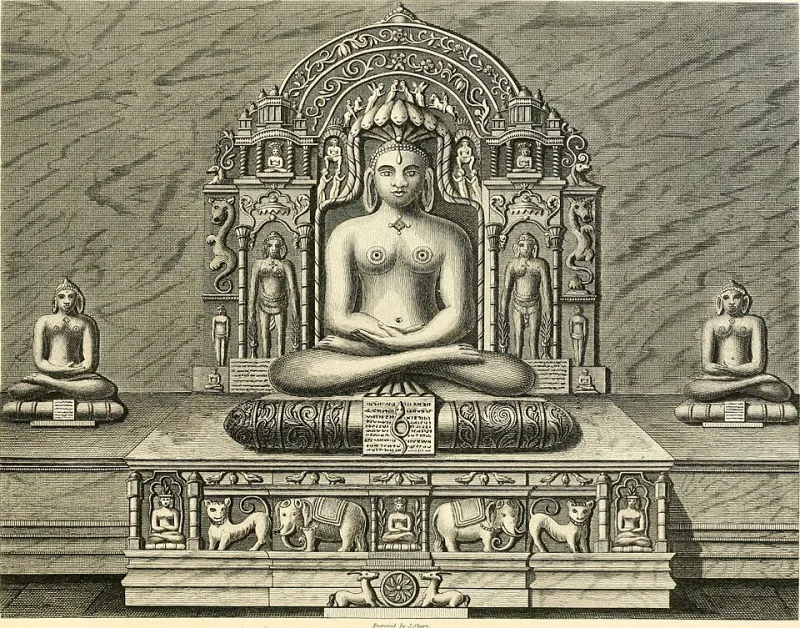
Hindu domestic practice has long centered on the puja room or puja corner—a space within the home dedicated to the images and objects of devotion, where incense, flowers, and lamps are offered as part of daily worship. In many Indian American households, this tradition has been faithfully maintained, and its influence has not gone unnoticed by neighbors and colleagues from other backgrounds who observe, with interest, the peace that seems to emanate from such intentional corners.
Why Now, and Why Here
The emergence of the micro-sanctuary trend in the United States is not occurring in a vacuum. It reflects several converging pressures that are reshaping the American spiritual landscape with considerable force.
The decline of institutional religious participation has left millions of Americans spiritually serious but structurally untethered. Without a congregation to provide a dedicated building, a liturgical calendar, or a community of practice, the responsibility for creating sacred space falls entirely to the individual. The micro-sanctuary is, in part, a pragmatic response to this reality: if the temple is not coming to you, you build one where you stand.
The pandemic-era collapse of the boundary between home and workplace also appears to have catalyzed this movement in significant ways. When living rooms became offices and bedrooms became classrooms, many Americans experienced an acute hunger for spaces that served a single, clearly defined purpose. The micro-sanctuary answered that hunger with particular elegance: here is a space that belongs entirely to the interior life, unsullied by productivity metrics or digital notifications.
There is also a broader cultural receptivity to contemplative practice that has been growing steadily for decades, nourished by the mainstreaming of mindfulness, the popularity of yoga and meditation apps, and a deepening American engagement with global spiritual traditions. Many of the people creating micro-sanctuaries are drawing eclectically on multiple traditions—combining a Buddhist singing bowl with a Christian icon, or a Native American smudge bundle with a Sufi devotional text—in a manner that reflects the genuinely interfaith character of contemporary American spiritual seeking.
The Ethics and Aesthetics of Borrowed Forms
This eclecticism is not without its complications. Scholars and practitioners within specific traditions have raised legitimate questions about whether the decontextualization of sacred objects and practices—removing them from their doctrinal frameworks and community contexts to serve as decorative or functional elements of a personal sanctuary—constitutes a form of appropriation that does harm. These are serious questions, and they deserve serious engagement.
At the same time, the impulse behind the micro-sanctuary is one that the world's contemplative traditions would, on the whole, recognize and honor: the desire to create conditions in which genuine encounter with the sacred becomes possible. The specifics of form matter, and cultural humility is essential. But the underlying aspiration—to find, within the noise and demand of an ordinary life, a place where the soul can breathe—is one of the oldest human longings on record.
Entering the Threshold
For those drawn to explore this practice, the wisdom of global traditions offers practical guidance. Consistency matters more than grandeur: a small, clean, simply appointed space visited daily will serve the contemplative life far better than an elaborately decorated room visited rarely. The marking of a threshold—whether through a physical boundary, a ritual gesture of entry, or a particular sensory cue such as lighting incense or removing shoes—appears to be neurologically and spiritually significant across traditions. And the space should, as much as possible, be protected from the intrusions of ordinary life: no phones, no screens, no ambient noise from the world beyond the threshold.
The software engineer in Columbus understands this. Each morning, she steps into her consecrated closet, closes the door behind her, and allows the accumulated intention of ten thousand previous mornings to receive her. The world is still there, on the other side of the door. It will wait eleven minutes.
So, it seems, will the sacred—patient, present, and entirely prepared to meet her in whatever corner she has set aside.