Ancient Words for Unspeakable Loss: How Global Prayer Traditions Are Giving Americans a Language for Collective Sorrow
In the weeks following a mass shooting in a small Midwestern city several years ago, a community center in a nearby suburb hosted what its organizers described simply as a gathering. There was no single officiating clergy member. On a long table near the entrance, participants had placed a menorah, a string of prayer beads, a bundle of sage, a small brass lamp, and a printed copy of the opening verse of the Quran. People arrived in silence and left the same way. Between those two silences, something happened that many attendees later struggled to articulate.
"I had been to the official memorial," said one participant, a high school teacher named Diane. "This was different. This reached somewhere the other one didn't."
Her experience points toward a question that researchers in psychology, religious studies, and public health are beginning to examine with greater rigor: Why do certain ancient ritual traditions appear to offer more adequate containers for collective grief than the forms that contemporary American public life typically provides?
The Inadequacy Problem
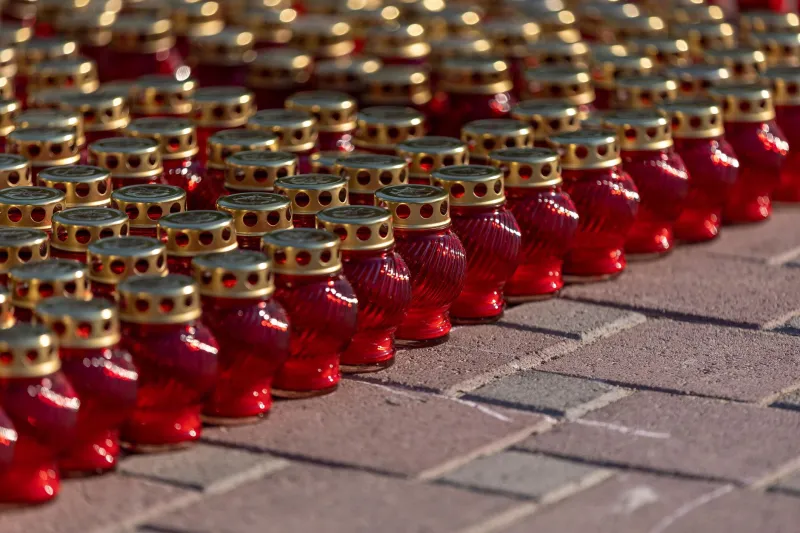
American public mourning has developed a fairly consistent grammar. Candle vigils. Flowers at a fence. Hashtags. Moments of silence. Speeches from officials. These forms are not without value—they signal communal solidarity and provide a structured outlet for individual grief. But many grief researchers and clinicians note that they tend to be brief, relatively passive, and oriented toward resolution rather than sustained witness.
The traditions that practitioners are increasingly borrowing from operate on different premises entirely.
The Jewish practice of shiva, for instance, structures mourning across seven days of communal gathering, during which the bereaved are explicitly relieved of normal social obligations and surrounded by those who come not to fix or comfort but simply to be present. The Kaddish prayer, recited by mourners for eleven months following a death, does not mention death at all—it is a declaration of divine praise, a form that holds grief and affirmation in deliberate, paradoxical tension. Psychologists who have studied the practice note that its sustained, communal repetition may serve functions that brief memorial services cannot.
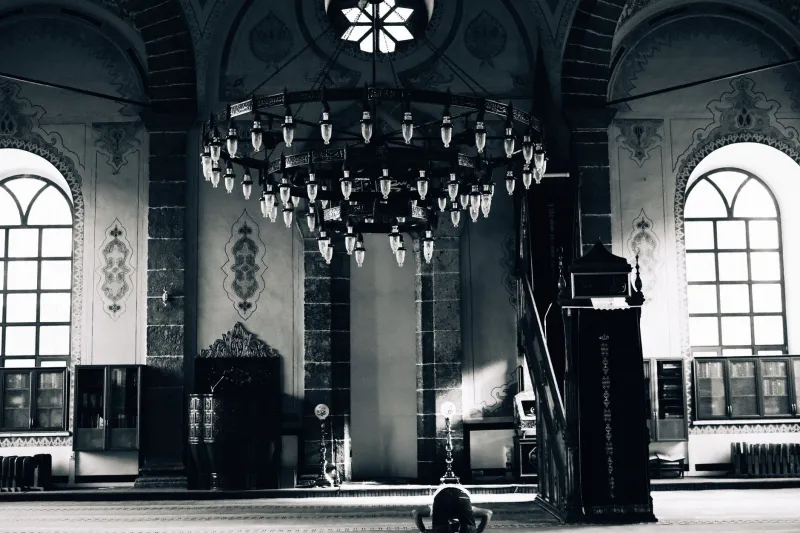
Islamic Du'a—supplicatory prayer offered in direct, intimate address to God—provides a different but complementary resource. Unlike formal liturgy, Du'a is inherently personal and adaptive; it can be offered in any language, at any time, for any specific grief. In the context of collective trauma, Muslim communities have long gathered for communal Du'a that names specific losses with specificity and directness, refusing the abstraction that can make official memorial language feel hollow.
What Indigenous Ceremony Holds
Perhaps no tradition has generated more interest among non-Native Americans processing collective grief than Indigenous ceremonial practices—and none requires more careful, respectful engagement.
Many Native American ceremonial traditions understand grief not as a private psychological event but as a disturbance in relational webs that extend outward to community, land, and the non-human world. Healing, in this framework, requires practices that address all of those dimensions simultaneously. The Lakota concept of Mitákuye Oyásʼiŋ—often translated as "all my relations"—expresses an understanding of interconnection that shapes how grief is held and processed ceremonially.
Several Indigenous scholars and practitioners have written thoughtfully about the risks of what they term "spiritual tourism"—the appropriation of ceremonial forms by non-Native practitioners without the relational and cultural context that gives those forms their meaning and integrity. This concern is legitimate and important. Yet some Indigenous teachers have also spoken about the possibility of non-Native people learning from Indigenous principles—the emphasis on communal witness, on land and embodiment, on extended rather than abbreviated mourning—without claiming specific ceremonies as their own.
For interfaith communities navigating this terrain, the distinction between learning from a tradition and claiming ownership of it is not merely ethical but spiritual. The depth of what these traditions offer is inseparable from the communities that have carried and refined them across generations.
The Neuroscience of Ritual Mourning
Researchers studying the psychophysiology of grief have begun to identify mechanisms that may explain why structured ritual practices appear to support collective healing in ways that informal or improvised mourning does not.
Studies conducted at institutions including Columbia University and the Max Planck Institute have examined how repetitive, structured behavior—the kind that characterizes formal ritual across virtually every human culture—activates neural pathways associated with predictability and control, which are among the first casualties of traumatic experience. When the world has become suddenly and violently disordered, the body's encounter with ordered, predictable form may provide a form of neurological scaffolding.
The communal dimension matters as well. Research on social baseline theory suggests that the human nervous system is fundamentally calibrated for co-regulation—that the presence of other people, engaged in shared intentional activity, reduces the metabolic cost of managing distress. Ancient mourning traditions that gather communities together for sustained, structured practice may be doing something physiologically significant, not merely symbolically meaningful.
Hindu puja—the devotional ritual of offering light, water, flowers, and food to a deity or sacred image—incorporates sensory engagement across multiple modalities simultaneously. The lighting of the lamp, the sound of bells, the fragrance of incense, the tactile handling of offerings: each element draws the practitioner's attention fully into the present moment while anchoring that attention in a framework of meaning that extends beyond the individual. For communities processing collective loss, the fullness of sensory engagement may serve as a counterweight to the numbing and dissociation that trauma commonly produces.
Interfaith Witnessing as Practice
What distinguishes the gatherings that participants like Diane describe from mere multicultural programming is a specific quality of attention: the willingness to witness another tradition's grief practice without immediately translating it into one's own familiar categories.
This quality—call it contemplative hospitality—is itself a spiritual discipline, and several interfaith communities across the United States have begun to cultivate it deliberately. Rather than designing services that blend traditions into a smooth, undifferentiated whole, these communities are experimenting with a different model: holding space for each tradition's practice in its distinctiveness, allowing participants to witness without necessarily participating, and trusting that genuine encounter across difference is itself a form of healing.
A rabbi in the Pacific Northwest who has participated in several such gatherings described the experience with characteristic precision: "When I watched a Muslim woman perform Du'a for the children who had died, I did not understand her words. But I understood her grief. And somehow, being witnessed in my grief by someone whose tradition is not mine—that was something I had not known I needed."
The Vocabulary We Have Been Missing
What Americans are discovering, through these encounters with global mourning traditions, may be less a set of specific practices than a broader orientation: the recognition that collective grief requires collective form, that mourning has a legitimate duration, that the body must be involved, and that the presence of others—in their full particularity, not as an undifferentiated crowd—is not incidental to healing but essential to it.
These are not new insights. They are, in a very real sense, among the oldest human understandings there are. The fact that contemporary American culture has so largely lost access to them may explain, at least in part, why so many Americans feel that their public grief rituals reach only the surface of what they carry.
The ancient words, it turns out, were never meant only for the communities that first spoke them. They were meant for the grief that all human beings share—and for the deep, stubborn need to face that grief together.