The Long Way Home: Why Millions of Americans Are Returning to the Faiths They Once Left Behind

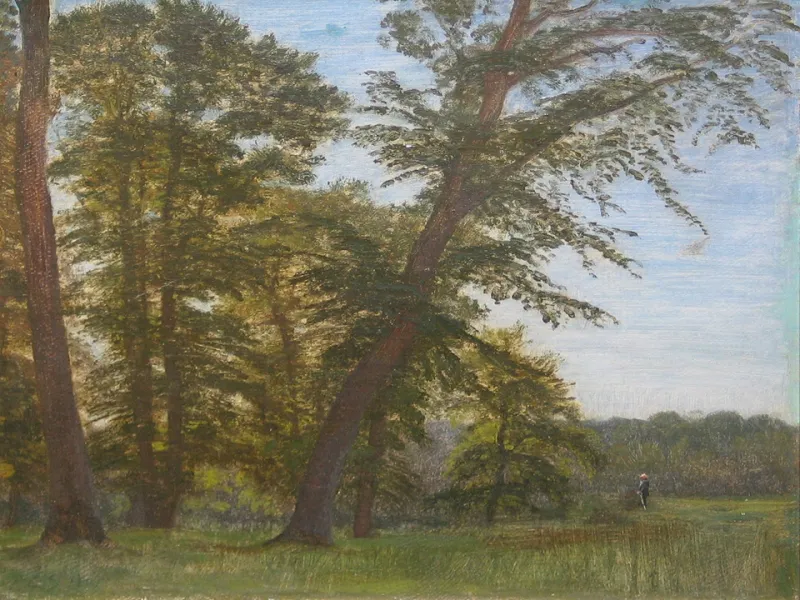
Photo: Photos by flipchip / LasVegasVegas.com, CC BY-SA 3.0, via Wikimedia Commons
For years, the dominant narrative of American religious life has been one of departure. Sociologists charted the rise of the "nones"—those who claim no religious affiliation—and popular culture celebrated the freedom of leaving behind inherited belief systems. Yet beneath that headline, a quieter and more complicated story has been unfolding. Across the country, adults who once deliberately stepped away from the religious traditions of their upbringing are finding their way back. Not necessarily to the same pews or the same certainties, but to something recognizable nonetheless.
This phenomenon, which researchers sometimes call "religious return" and which those who experience it often describe simply as coming home, is challenging long-held assumptions about how spiritual lives develop over time. Faith, it turns out, rarely moves in a straight line.
A Departure That Was Never Final
The reasons people leave religious communities in the first place are as varied as the traditions they exit. Some depart in adolescence, driven by intellectual doubts or the ordinary friction of identity formation. Others leave in young adulthood after specific wounds—conflict with clergy, disillusionment with institutional hypocrisy, or the experience of being excluded because of who they love or how they live. Still others simply drift, pulled away by busy schedules and the gradual erosion of habit.
Yet for many, the departure carries an unresolved quality. The prayers learned in childhood have a way of surfacing in moments of crisis. The liturgical calendar imprints itself on the body. A particular fragrance—incense, beeswax candles, the particular mustiness of an old sanctuary—can suddenly collapse decades of distance.
Psychologists who study religious development have observed that the self formed within a tradition does not simply vanish when one leaves it. Rather, that formation becomes part of the substrate of identity, waiting to be renegotiated rather than erased.
What Draws People Back
Those who return rarely describe their re-engagement as a simple reversal of their earlier decision. More often, they speak of arriving at a threshold—a life event, a loss, the birth of a child, the onset of illness, or a period of sustained suffering—that made the old resources suddenly relevant again.
For some, the draw is contemplative. The meditation practices embedded within their tradition of origin—centering prayer in Catholicism, hitbonenut in Jewish mysticism, dhikr in Sufi Islam, or the structured silence of Quaker meeting—offer something that secular mindfulness apps and wellness culture have not fully replicated: a sense of rootedness within a lineage that extends backward through generations.
For others, the pull is communal. The loneliness that has come to define much of American life in the twenty-first century creates a hunger for belonging that casual social networks struggle to satisfy. Religious communities, for all their imperfections, have historically provided a particular kind of sustained, intergenerational intimacy that is difficult to manufacture elsewhere.
And for still others, the return is aesthetic and embodied. The prayers of childhood live in muscle memory. Reciting them again—even haltingly, even with reservation—produces a physiological response that feels, to those who experience it, like something more than mere nostalgia.
Reconciling the Wound With the Practice
Perhaps the most delicate aspect of spiritual homecoming is the work of distinguishing between the tradition itself and the harm that was sometimes inflicted in its name. Many who return do so carrying real injuries: the memory of shame-based teaching, the experience of exclusion, or the aftermath of institutional failures that were profound and, in some cases, criminal.
This work of discernment is rarely clean. It requires holding two truths simultaneously—that a tradition can be a source of genuine spiritual nourishment and that it can also have been wielded as a tool of damage. Therapists who specialize in religious trauma increasingly report that clients are seeking not simply to leave harmful religious experiences behind, but to recover a relationship with the sacred that predates or transcends the harm.
Some returnees describe a process of selective reintegration: reclaiming the contemplative core of a tradition while declining to re-enter its institutional structures. They may pray the old prayers in private without rejoining the congregation. They may observe the holy days without submitting to the authority of the clergy. They may find a community that practices the same tradition with a different ethos—more inclusive, more theologically humble, more willing to hold ambiguity.
This approach is sometimes criticized from within traditions as insufficiently committed. But those who practice it tend to describe it not as half-heartedness but as integrity: a refusal to pretend that the past did not happen, alongside an equally firm refusal to let the past determine the future entirely.
What This Pattern Reveals About American Spirituality
The phenomenon of spiritual homecoming complicates the tidy binaries that have long structured public conversation about religion in the United States. The debate between the secular and the devout, between leavers and stayers, between the faithful and the skeptical, assumes a kind of permanence to each position that lived experience consistently undermines.
What the returnees suggest, instead, is that spiritual life is fundamentally cyclical rather than linear. The traditions of the world's great religions have always known this. The concept of return—teshuvah in Judaism, tawbah in Islam, metanoia in Christianity, the recurring cycles of Buddhist practice—is not incidental to these traditions but central to them. The assumption that a person leaves a tradition once and for all may itself be a distinctly modern, and distinctly Western, misreading of how human beings actually inhabit belief.
Researchers at institutions such as the Pew Research Center have documented the fluidity of American religious identity for years, but the data on return has often been overshadowed by the more dramatic statistics on departure. As the generation that left in large numbers during the 1990s and 2000s now enters midlife, the return current is becoming impossible to ignore.
A Different Kind of Faith
Those who come back rarely come back unchanged. The faith they practice in their forties and fifties is almost always more textured, more questioning, and more personally owned than the faith of their childhood. They have earned their doubts and carry them openly. They tend to be less interested in certainty and more interested in practice—in the daily, embodied disciplines that connect them to something larger than the self.
In this sense, the spiritual homecomer may be one of the more honest figures in contemporary American religious life: someone who has tested the tradition against the full weight of experience, found it insufficient in some respects and irreplaceable in others, and chosen, with full awareness of both, to return.
The prayers they recite may be the same words their grandparents spoke. But the relationship to those words is entirely their own.