When the World Breaks Open: The Surge in American Prayer During Times of Collective Crisis
Photo: Gannu03, CC BY-SA 4.0, via Wikimedia Commons
In the spring of 2020, as lockdown orders shuttered houses of worship from Seattle to Miami, something unexpected happened: prayer did not disappear. It multiplied. A Pew Research Center survey conducted during the early months of the COVID-19 pandemic found that roughly 55 percent of American adults reported praying for an end to the outbreak—a figure that cut across denominational lines and, notably, included a meaningful share of people who described themselves as religiously unaffiliated. Crisis, it seemed, had done what decades of interfaith dialogue had struggled to accomplish. It had drawn people toward the same instinct at the same moment.
That instinct has a name in academic circles. Psychologists and sociologists who study religion call it crisis-driven spirituality—a measurable uptick in contemplative and devotional behavior triggered by events that overwhelm ordinary coping mechanisms. Understanding why it happens, what it looks like across different faith traditions, and whether it endures long after the emergency has passed is one of the more revealing puzzles in the contemporary study of American religious life.
The Data Behind the Devotion
The pattern is not new, nor is it unique to the pandemic. Following the September 11 attacks, Gallup polling recorded a sharp spike in weekly church attendance and personal prayer among Americans of all backgrounds. Similar surges were documented in the aftermath of Hurricane Katrina in 2005 and in the weeks following the 2008 financial collapse. Sociologist Robert Wuthnow of Princeton University has argued that these episodes function as what he terms "shocks to the moral order"—moments when the ordinary assumptions that structure daily life are suddenly, violently suspended, and individuals reach instinctively for frameworks that can contain the incomprehensible.
What makes contemporary data particularly striking is the breadth of that reach. It is no longer confined to those already embedded in traditional religious communities. The Pew Forum's longitudinal research has consistently shown that even among Americans who rarely or never attend religious services, rates of self-reported prayer climb measurably during national emergencies. In a country where the "nones"—those who identify with no particular religion—now represent roughly 28 percent of the adult population, this is a sociologically significant finding.
What Psychologists Are Learning
From a psychological standpoint, the appeal of prayer during crisis is not difficult to understand, even for researchers who approach the subject from an entirely secular vantage point. Dr. Kenneth Pargament, a psychologist at Bowling Green State University and one of the leading scholars of religion and coping, has spent decades documenting what he calls "religious coping"—the ways in which spiritual practices help individuals manage stress, grief, and uncertainty.
In his research, Pargament distinguishes between different modes of religious coping. Some individuals engage in what he describes as a "collaborative" style, experiencing prayer as a partnership with a divine presence in working through difficulty. Others adopt a more "deferring" posture, surrendering outcomes to a higher power. Still others use prayer primarily as a vehicle for meaning-making—a way of narrating suffering within a larger cosmic framework. Across all these styles, the research suggests that religious coping is associated with lower rates of depression, reduced anxiety, and greater resilience in the face of prolonged adversity.
Crucially, the psychological benefits do not appear to depend on theological specificity. Contemplative practices drawn from Buddhism, Islam, Indigenous American traditions, and evangelical Christianity have all shown measurable effects on stress biomarkers in controlled studies. The common thread, researchers suggest, is not doctrinal content but the act itself: the deliberate turning of attention toward something larger than the individual self.
How Different Traditions Frame Adversity
Across the world's major contemplative traditions, hardship has rarely been treated as an anomaly to be explained away. It has more often been understood as a threshold—a passage through which deeper spiritual understanding becomes possible.
In Islamic thought, the concept of sabr (patient endurance) frames suffering as a form of purification and proximity to the divine. Prayers during times of trial are not petitions for rescue alone; they are acts of trust in a providential order that transcends immediate circumstances. Similarly, within many strands of Jewish theology, the practice of tefillah (prayer) during communal crisis carries an explicitly communal dimension—it is understood as a collective turning, a reorientation of the community toward covenant and responsibility.
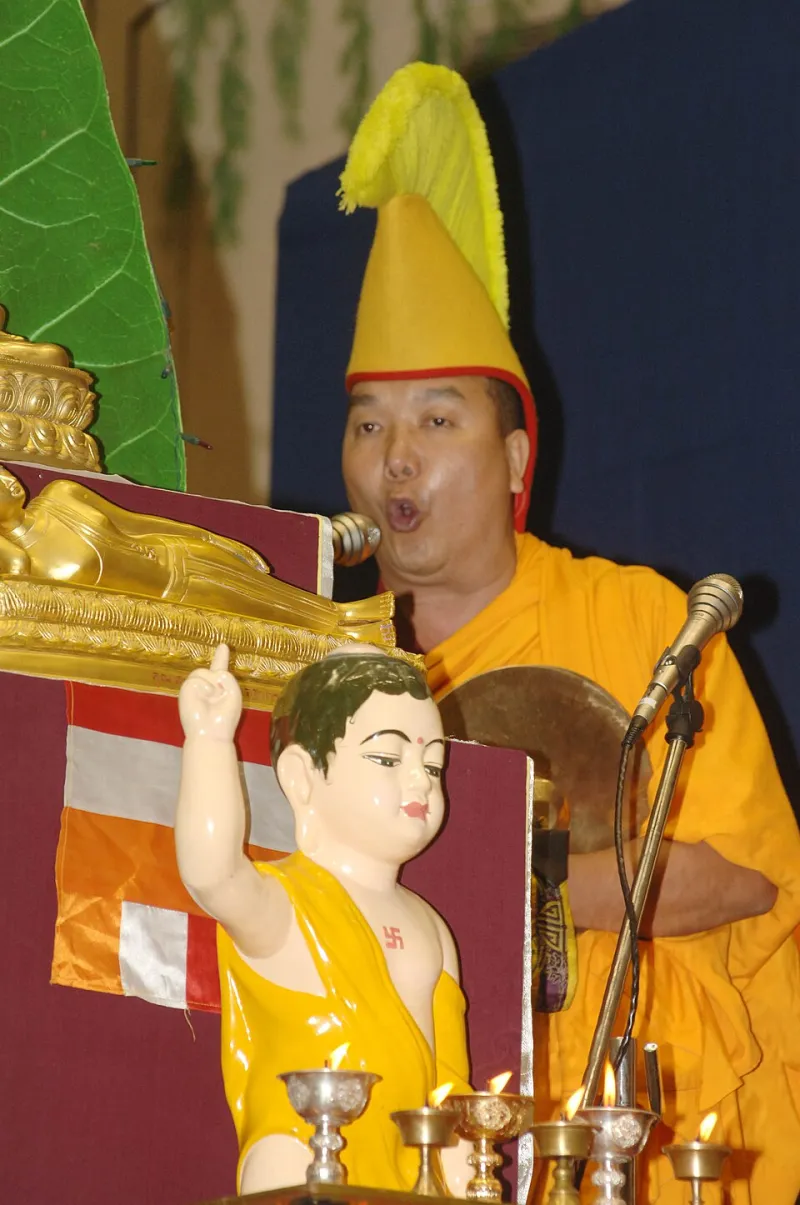
Buddhist traditions, particularly those practiced widely in Asian American communities across the United States, tend to approach crisis through the lens of impermanence. Contemplative practices during difficult periods are less oriented toward changing external circumstances and more focused on transforming one's relationship to suffering itself. Metta, or loving-kindness meditation, has seen significant adoption beyond Buddhist communities in recent years, particularly during periods of social and political upheaval, as practitioners find in it a structured way to extend compassion outward when the world feels fractured.
Native American prayer traditions, though extraordinarily diverse across nations and regions, frequently understand communal crisis as a signal of relational imbalance—between human communities and the natural world, or between the living and the ancestral. Ceremonial response to crisis in many of these traditions is not individual but collective, oriented toward restoration of right relationship rather than individual petition.
The Stickiness Problem
Perhaps the most contested question among religious scholars is whether crisis-driven spirituality leaves a lasting imprint. The historical record is sobering. The post-9/11 surge in church attendance, for instance, had largely dissipated within six weeks of the attacks, according to data compiled by sociologists C. Kirk Hadaway and Penny Long Marler. The pandemic-era prayer surge appears to have followed a similar trajectory: by late 2021, Pew data suggested that most Americans had returned to their pre-pandemic levels of religious engagement.
And yet scholars caution against reading these numbers as evidence that crisis-born spiritual experience is simply ephemeral. Some research suggests that while institutional participation may revert quickly, internal shifts in spiritual orientation can be more durable. Individuals who had no prior prayer practice before a crisis sometimes report that a new habit, however modest, persists—a moment of quiet reflection before sleep, a brief expression of gratitude at the start of the day. These micro-practices may not register in surveys measuring weekly attendance, but they represent a genuine, if quiet, reorientation.
Religious historian Diana Butler Bass has argued that what Americans are experiencing is less a crisis of faith than a transformation in its form—a movement away from institutional structures and toward what she calls "practiced spirituality," a more personal, often syncretic engagement with contemplative traditions. Crisis, in her view, does not create faith from nothing. It reveals and reshapes what was already present beneath the surface of ordinary life.
A Mirror, Not a Manufacturer
What the data ultimately suggests is that collective crisis does not manufacture spiritual longing so much as it makes visible a longing that was already there. The American religious landscape is vast, internally contradictory, and perpetually in motion—but beneath its surface runs a persistent current of contemplative need. Crisis does not create that current. It simply breaks through the ordinary noise of daily life and allows it to be heard.
For those who study prayer as a global phenomenon, this is neither surprising nor discouraging. Across centuries and cultures, the contemplative traditions of the world have consistently identified suffering as one of the most reliable doorways into deeper spiritual awareness. What is perhaps most remarkable about the American experience is not that people pray more during crisis, but that they do so across lines of doctrine, denomination, and belief that might otherwise seem to divide them absolutely. In those moments, the particulars of theology recede, and something more fundamental—the simple, ancient act of reaching outward in the dark—becomes briefly, powerfully shared.