Om, Dhikr, and the Resonant Mind: What Neuroscience Is Discovering About Sacred Sound
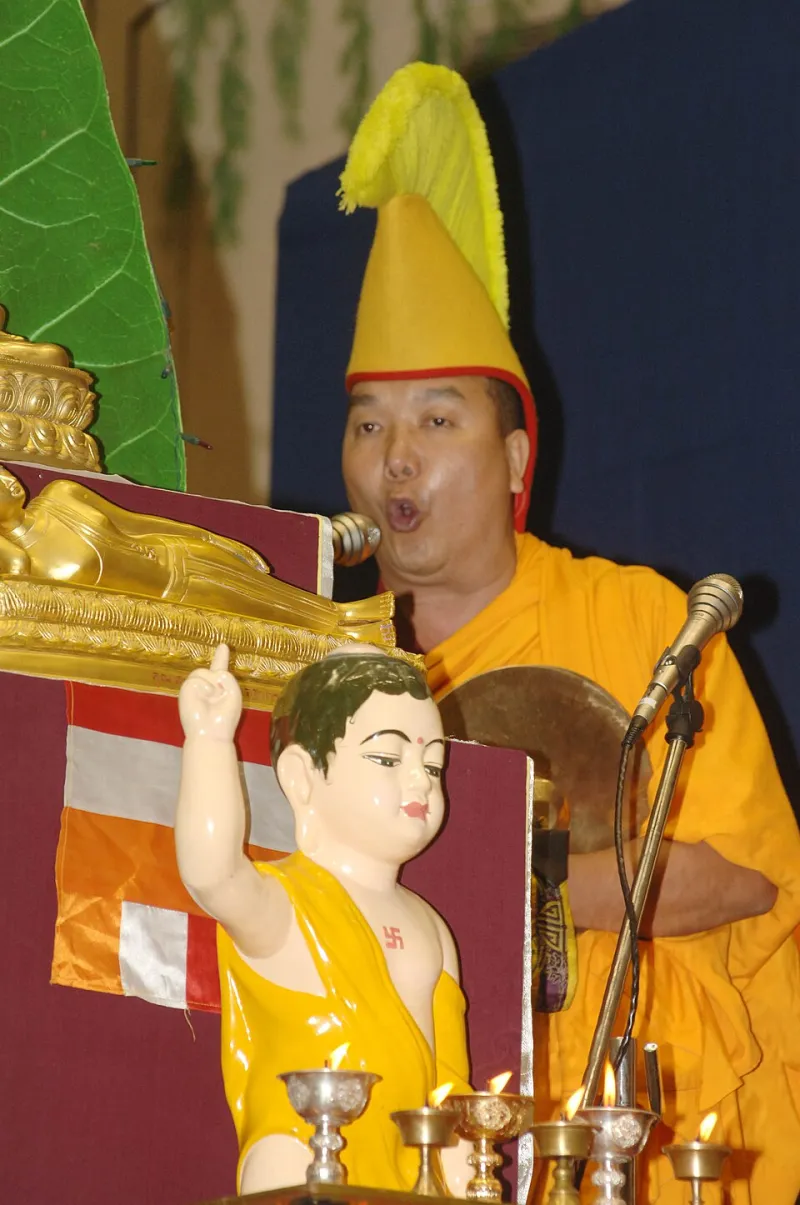
Photo: Ministry of Culture, GODL-India, via Wikimedia Commons
The Ancient Technology of Repetitive Sound
Long before functional MRI machines or electroencephalographs existed, spiritual communities around the world had already engineered remarkably sophisticated systems for using the human voice as an instrument of inner transformation. Hindu practitioners recited Sanskrit mantras such as So Hum and Aum Namah Shivaya in precise rhythmic cycles. Sufi Muslims engaged in dhikr — the rhythmic repetition of divine names like Allah or Subhanallah — sometimes for hours at a stretch. Tibetan Buddhist monks intoned low, multiphonic chants that seemed to resonate not just in the room but in the very bones of those present.
These traditions did not emerge from superstition alone. They were, in many respects, empirical discoveries made through centuries of careful inner observation. Today, researchers at institutions including Harvard Medical School, the University of California San Diego, and the All India Institute of Medical Sciences are arriving at similar conclusions through an entirely different methodology: controlled scientific experimentation.
Brainwaves in the Sanctuary
One of the most consistent findings in mantra research involves the modulation of brainwave activity. Under normal waking conditions, the human brain oscillates predominantly in the beta frequency range — roughly 13 to 30 Hz — associated with active, analytical thinking. Studies using quantitative EEG have demonstrated that sustained mantra recitation, particularly when practiced with focused attention, reliably shifts neural activity toward alpha waves (8 to 12 Hz) and, in experienced practitioners, theta waves (4 to 8 Hz).
Dr. Andrew Newberg, a neuroscientist at Thomas Jefferson University in Philadelphia and a leading researcher in the field of neurotheology, has documented through neuroimaging studies that intensive chanting and prayer practices produce measurable changes in prefrontal cortex activity — the region associated with focused attention and intentional thought — while simultaneously reducing activity in the parietal lobe, which governs the brain's construction of the boundary between self and environment. This neurological loosening of self-other distinction corresponds closely to what contemplatives across traditions describe as a sense of unity or dissolution of the ego during deep practice.
"What's remarkable," Newberg has noted in his published work, "is that these neurological signatures appear across traditions that have no historical contact with one another. The brain seems to respond to the practice itself, not merely to the belief system surrounding it."
The Vagus Nerve and the Rhythmic Breath
Beyond the brain, mantra recitation exerts a profound influence on the autonomic nervous system — and much of that influence appears to be mediated by the breath. Most traditional mantra practices implicitly regulate breathing. The recitation of a mantra phrase naturally synchronizes inhalation and exhalation, typically slowing the respiratory rate to somewhere between four and seven breaths per minute. This is not coincidental.
Research published in the British Medical Journal examined the physiological effects of reciting the Ave Maria in Latin and the Sanskrit mantra Om Mani Padme Hum — two practices drawn from entirely different cultural and religious contexts. Both produced what the researchers termed "striking, powerful, and synchronous" increases in heart rate variability (HRV), a key marker of cardiovascular health and autonomic nervous system balance, as well as measurable reductions in blood pressure. The common mechanism, the researchers concluded, was respiratory: both practices naturally entrained breathing to approximately six cycles per minute, the frequency at which the cardiovascular system achieves maximum coherence.
High HRV is strongly associated with resilience to stress, reduced risk of cardiac events, and better emotional regulation. The implication — that grandmothers reciting rosary beads and Tibetan monks intoning om mani padme hum may be performing essentially equivalent cardiovascular medicine — is one that has not been lost on clinicians.
Cortisol, Inflammation, and the Stress Response
Perhaps the most clinically significant area of mantra research concerns the neuroendocrine system. Chronic psychological stress activates the hypothalamic-pituitary-adrenal (HPA) axis, flooding the body with cortisol and triggering systemic inflammation that underlies conditions ranging from depression and anxiety to cardiovascular disease and autoimmune disorders.
A 2019 study conducted at the National Brain Research Centre in India measured salivary cortisol levels in participants before and after a twelve-week program of daily Sanskrit mantra recitation. Participants showed statistically significant reductions in cortisol, alongside self-reported decreases in perceived stress. Complementary research on Islamic dhikr practice, conducted in Iran and Malaysia, has yielded comparable results, with participants in structured dhikr programs showing reduced anxiety scores, lower cortisol, and improved markers of immune function.
Sri Swami Satchidananda, whose teachings brought mantra practice to American audiences beginning in the 1960s, described the mantra as "a vehicle to carry the mind from the surface to the depths." From a neuroscientific standpoint, that metaphor maps with surprising precision onto the documented shift from sympathetic nervous system dominance — the fight-or-flight state — toward parasympathetic activation, commonly described as the rest-and-digest or, in Herbert Benson's influential formulation, the "relaxation response."
Tradition as Laboratory
For practitioners embedded within living spiritual traditions, these scientific validations can feel both gratifying and, at times, reductive. Sister Joan Delaney, a Benedictine contemplative in New Mexico who has practiced the repetitive recitation of sacred phrases within the Christian hesychast tradition for over three decades, expressed a perspective shared by many:
"I welcome the research, and I find it genuinely interesting. But I want to be clear that what happens in this practice is not reducible to cortisol levels. The science can measure the shadow of the experience. It cannot measure the experience itself."
This tension — between the measurable and the ineffable — runs through virtually every conversation between scientists and contemplatives. Researchers like Dr. Sara Lazar at Massachusetts General Hospital, whose work on the neurological effects of meditation has been widely cited, are careful to distinguish between what the instruments can capture and what they cannot.
What the instruments can capture, however, is already extraordinary: demonstrable changes in brain structure, autonomic function, hormonal regulation, and inflammatory markers, produced by practices that cost nothing, carry no pharmacological side effects, and have sustained entire civilizations for thousands of years.
A Convergence Worth Attending To
For American readers navigating an era of unprecedented stress and spiritual searching, the neuroscience of mantra offers something valuable regardless of one's religious convictions: evidence that the human body is, in some fundamental sense, designed to respond to sacred sound. Whether one understands that response through the lens of neurochemistry or through the language of divine grace, the practical implications are the same.
The voice, directed inward with intention and rhythm, appears to be one of the most powerful regulatory instruments available to human beings. Ancient traditions discovered this through practice. Modern science is confirming it through measurement. The conversation between these two ways of knowing is, in itself, a kind of prayer — a reaching toward understanding that neither tradition nor science can fully complete alone.