Recovered Roots: The Americans Unearthing Forgotten Prayers Through Genealogy
The document that changed everything for Diane Kowalczyk was a single line in a 1902 ship manifest. Her great-great-grandmother, listed as arriving at Ellis Island from a village in Galicia — a region that is now part of western Ukraine — had declared her religion not as Roman Catholic, as family lore had always maintained, but as "Greek Catholic," the bureaucratic shorthand of the era for Byzantine Rite Catholicism. That one word unlocked a decades-long investigation.
"My family had completely assimilated," says Kowalczyk, a fifty-one-year-old librarian from Cleveland, Ohio. "By my grandparents' generation, there was nothing left of the old country — no language, no food, certainly no religion. They wanted to be American. But I always felt like something was missing."
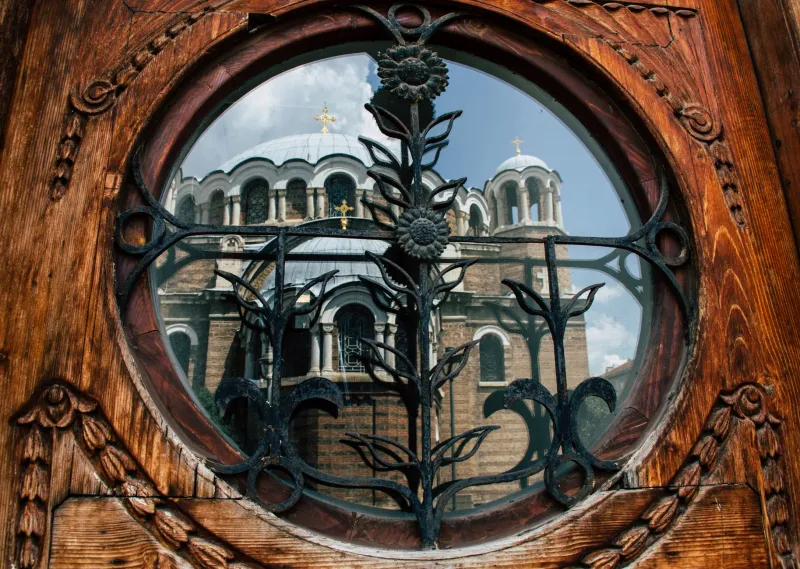
What followed was years of research: parish records, historical archives, correspondence with a monastery in Pennsylvania that had served Ruthenian immigrant communities a century earlier. Today, Kowalczyk attends a Byzantine Catholic parish, has learned to chant the Divine Liturgy in Church Slavonic, and lights candles before a home iconostasis her husband built from a pattern she found in an old parish photograph. "I'm not pretending to be my great-great-grandmother," she says carefully. "But I'm praying the prayers she prayed. That matters to me."
The Genealogy Boom Reaches the Soul
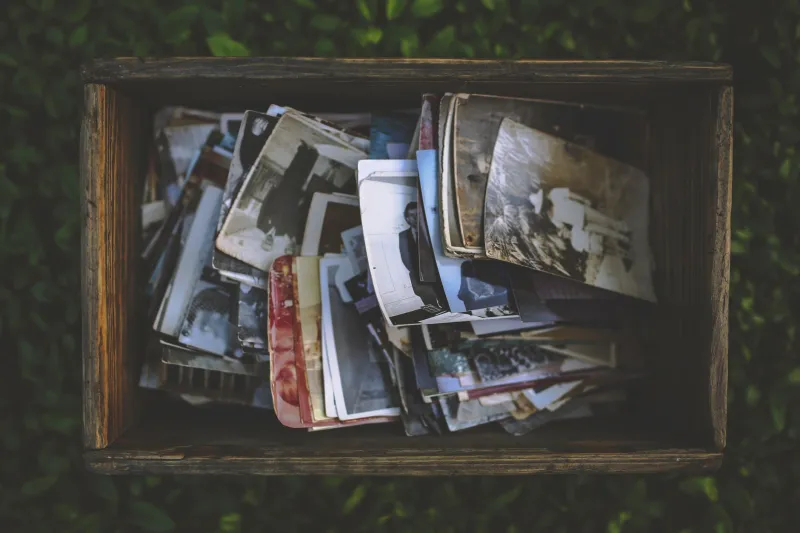
The past decade has witnessed an extraordinary democratization of genealogical research. Services such as Ancestry.com, 23andMe, and MyHeritage have made it possible for tens of millions of Americans to trace family lines that were previously inaccessible, while the digitization of historical records — immigration documents, church registers, census files — has opened archives that once required international travel to consult.
For many users, the initial motivation is biographical curiosity. But a significant and growing subset of researchers find themselves confronting not merely names and dates but entire spiritual worlds that their families inhabited and subsequently abandoned. The reasons for that abandonment vary — forced assimilation, religious persecution, the practical pressures of immigrant life, the deliberate suppression of indigenous practice — but the effect is often the same: a sense of spiritual discontinuity that genealogical discovery can suddenly make legible.
"People come to me with a family tree and leave with a theology," says Dr. Marcus Webb, a religious historian at Emory University who has studied the intersection of genealogy and faith formation. "They discover that their great-grandparents were Anabaptists, or Crypto-Jews, or practitioners of Vodou, and suddenly their own spiritual restlessness makes a different kind of sense."
When the Archive Speaks of Suppression
Not all genealogical spiritual discoveries are matters of immigrant assimilation. For many Americans, the records reveal something far more painful: the deliberate erasure of spiritual practice through colonial violence, enslavement, or state-sponsored persecution.
For Native American families, the trauma of Indian boarding schools — institutions that systematically severed children from language, ceremony, and spiritual tradition — is often legible in the genealogical record. A gap in the archive, a child listed without tribal affiliation, a name that has been anglicized beyond recognition: these absences are themselves a form of testimony.
Loretta Swiftwind, a forty-four-year-old social worker from Albuquerque, New Mexico, whose family includes both Diné (Navajo) and Anglo heritage, spent five years working with tribal elders and historical records to reconstruct ceremonial practices that her grandmother's generation had been compelled to abandon. "The boarding school took the songs," she says. "Genealogy helped me find out which songs they were. Elders helped me understand what they meant. Those are two completely different kinds of knowledge, and you need both."
Swiftwind's account points toward a critical distinction that researchers, practitioners, and community leaders consistently emphasize: the difference between recovering a lineage to which one has genuine ancestral connection and adopting a tradition to which one does not.
Reclamation Versus Appropriation: A Meaningful Line
The question of cultural appropriation is one that hangs over any discussion of spiritual reconstruction, and it is a question that practitioners in this space tend to approach with considerable seriousness.
"Reclamation is an act of return," says Dr. Webb. "Appropriation is an act of taking. The distinction is not always easy to draw, but the genealogical and relational work — establishing actual lineage, seeking guidance from living community members, approaching the tradition with humility rather than as a consumer — is what makes the difference meaningful."
For Jewish Americans whose families practiced Crypto-Judaism — the hidden observance maintained by Sephardic Jews forced to convert to Catholicism during the Spanish Inquisition — the question of reclamation has particular resonance. Many families in the American Southwest carry practices that were preserved across five centuries of concealment: lighting candles on Friday evening without knowing why, avoiding pork without being able to articulate the prohibition, burying the dead with their faces turned east.
Naomi Castillo, a sixty-year-old retired schoolteacher from Santa Fe, discovered through genealogical research and DNA testing that her family's unusual domestic customs had their origin in Sephardic Jewish practice. The discovery sent her on a journey that eventually led to formal conversion to Conservative Judaism. "I didn't convert to something foreign," she insists. "I converted back to something that was always there, waiting."
The Spiritual Weight of the Archive
What emerges from these stories is a portrait of genealogy as a contemplative discipline in its own right — a practice of listening backward through time, of attending to the silences in the historical record with the same quality of attention that meditation cultivates in the present moment.
The archive does not yield its spiritual contents easily. It requires patience, interpretive skill, and a willingness to sit with uncertainty — to acknowledge that the prayers one's ancestors spoke in a language one cannot read addressed a God whose character one may not fully understand. It requires, in other words, something very much like faith.
"I don't know exactly what my great-great-grandmother believed," says Kowalczyk. "I don't know what the liturgy meant to her, or whether she found comfort in it, or whether she doubted. But when I stand in that church and hear the same words she heard, I feel connected to something larger than my own life. That's not nothing. That might be everything."
For the Americans engaged in this quiet, painstaking work of spiritual recovery, the genealogical record is not merely a historical document. It is, in the most literal sense, a family prayer book — one that was almost lost, and that they are determined to read.