The Worried Mind Finds Ancient Shelter: How Traditional Prayer Practices Are Being Validated as Tools Against Anxiety
Photo: USDAgov, Public domain, via Wikimedia Commons
Daniel Cho, a 38-year-old software engineer in Seattle, describes his anxiety as having a texture. "It's not dramatic," he said. "It's a low hum. A constant background noise that tells you something is about to go wrong, even when nothing is."
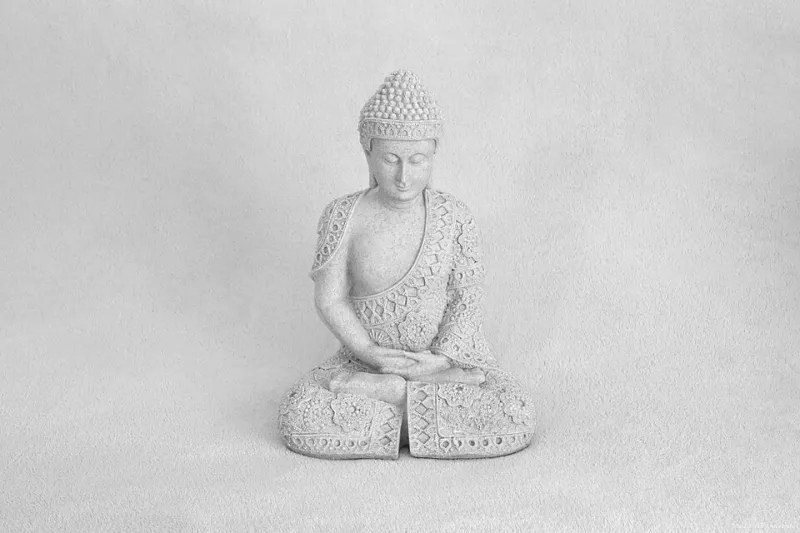
For years, Cho tried the standard toolkit: cognitive behavioral therapy, exercise, reduced caffeine, digital detoxes. Each helped, in partial and temporary ways. Then, during a particularly difficult stretch in 2021, a Korean-American friend introduced him to the Buddhist practice of metta meditation—a structured form of loving-kindness contemplation involving silent repetition of specific phrases directed first toward oneself, then outward toward others. Cho, who had no prior meditation experience and described himself as "agnostically spiritual at best," was skeptical.
Within six weeks, the hum had quieted perceptibly. Within three months, he was sleeping through the night for the first time in years.
"I don't fully understand why it works," he said. "But I know that it does."
Scientists are increasingly in a position to offer Cho an explanation.
Anxiety in America: The Scale of the Problem
Anxiety disorders are the most prevalent mental health condition in the United States, affecting an estimated 40 million adults—approximately 18 percent of the adult population—in any given year. The figures have worsened measurably since 2020. The American Psychological Association's annual Stress in America survey has consistently documented elevated anxiety levels across demographic groups, with particular concentrations among adults aged 18 to 44 and among caregivers, healthcare workers, and those navigating economic precarity.
Conventional treatments—pharmacotherapy, cognitive behavioral therapy, and mindfulness-based stress reduction—are effective for many patients, yet access remains uneven, stigma persists, and for a significant portion of sufferers, existing approaches provide only partial relief. Against this backdrop, researchers have begun examining the therapeutic potential of prayer and contemplative practice with unprecedented scientific rigor.
The Neuroscience of Repetitive Sacred Speech
One of the most consistently studied mechanisms involves the repetition of sacred phrases—what Christianity calls prayer, Islam terms dhikr, Buddhism describes as mantra, and Hinduism encompasses within japa practice. Across these traditions, the deliberate, rhythmic repetition of words or syllables has been understood for millennia to calm the mind and redirect attention. Neuroscience is now articulating why.
Dr. Herbert Benson of Harvard Medical School pioneered research into what he termed the "relaxation response"—a physiological state, elicitable through repetitive mental focus including prayer and mantra, that is essentially the inverse of the stress response. His foundational studies demonstrated measurable decreases in heart rate, blood pressure, and cortisol levels in subjects who engaged in repetitive prayer or mantra practice for as little as ten to twenty minutes daily.
More recent neuroimaging research has refined this picture considerably. Studies using functional MRI have shown that sustained mantra repetition reduces activity in the default mode network—the brain's so-called "resting state" system, which is heavily implicated in ruminative, self-referential thinking. Rumination, the tendency to replay worries and negative scenarios, is one of the primary cognitive features of anxiety disorders. By quieting the default mode network, repetitive prayer practice appears to interrupt the rumination cycle at a neurological level.
Dr. Zoran Josipovic, a neuroscientist at New York University who has studied the neural correlates of mantra-based meditation, describes the effect as "training the brain to disengage from the sticky loops of anxious thought." The repetition, he suggests, functions as an attentional anchor—something concrete and rhythmically predictable that the mind can return to whenever it begins to drift toward worry.
Structure as Shelter: The Role of Liturgical Form
Beyond mantra, researchers have examined how the formal structure of liturgical prayer—prayer that follows a prescribed sequence, language, and rhythm—may itself confer anxiolytic benefits.
Maria Santos, a 52-year-old schoolteacher in San Antonio, Texas, credits the Catholic rosary with managing what her physician diagnosed as generalized anxiety disorder. "The prayers are the same every time," she explained. "The beads are the same. The order is the same. When everything in my life feels chaotic, I can hold the rosary and know exactly what comes next. That predictability is medicine for me."
Santos's experience aligns with emerging psychological research on the role of ritual in anxiety regulation. A 2016 study published in Current Biology found that engaging in structured ritual behaviors prior to stressful tasks significantly reduced self-reported anxiety and physiological markers of stress, even when participants did not believe the rituals had any causal efficacy. The researchers proposed that the orderliness and predictability of ritual behavior counteracts the sense of uncontrollability that is central to anxiety's subjective experience.
In Islamic practice, the five daily prayers—Salah—impose a temporal structure on the day that many practitioners describe as psychologically grounding. Each prayer involves prescribed movements, specific recitations, and a defined orientation toward Mecca. Imam Khalid Rashid of a mosque community in Dearborn, Michigan, has observed that the regularity of Salah functions for many congregants as a consistent point of reorientation. "You cannot stay lost in anxiety indefinitely when you know that in three hours you will stop, you will kneel, you will remember what is actually real," he said. "The prayer brings you back."
Breath, Body, and the Hindu Contemplative Tradition
Hindu contemplative practice offers yet another angle of intersection with modern anxiety science: the deliberate coordination of breath with prayer or mantra.
Pranayama—the ancient system of regulated breathing that forms a pillar of yogic practice—has been extensively studied in clinical settings. A substantial body of research, including work published in the International Journal of Yoga and the Journal of Clinical Psychology, documents significant reductions in anxiety symptoms following structured pranayama practice. The mechanisms are now reasonably well understood: slow, diaphragmatic breathing activates the parasympathetic nervous system, directly counteracting the sympathetic arousal that underlies anxiety's physical symptoms.
When pranayama is combined with mantra or devotional prayer—as it is in many traditional Hindu practices—the effect appears to be additive. The breath provides physiological regulation while the sacred speech provides attentional focus, together creating what one researcher described as "a dual-track interruption of the anxiety response."
Preeti Nair, a yoga teacher and practitioner in the Chicago area who emigrated from Kerala, teaches a morning practice that integrates pranayama with recitation of Sanskrit devotional verses. "My students come to me carrying so much fear," she said. "Within twenty minutes of breathing and chanting together, you can see it physically leaving their bodies. The shoulders drop. The jaw unclenches. Something releases."
Ancient Wisdom, Modern Validation
Daniel Cho continues his metta practice every morning before opening his laptop. He is careful not to overstate the case. "It's not a cure," he said. "Anxiety is still part of my life. But I have a tool now that actually works, and it's thousands of years old. That's remarkable when you think about it."
For the millions of Americans navigating the daily burden of anxious minds, the convergence of ancient contemplative wisdom and contemporary neuroscience offers something genuinely hopeful: evidence that the traditions developed across centuries of human spiritual inquiry were, in their own way, already mapping the territory that science is only now beginning to chart.