Where Do You Begin? A Thoughtful Traveler's Guide to the World's Contemplative Traditions

Photo: diverse people meditation prayer circle interfaith spiritual practice, via i.ytimg.com
The Hunger and the Abundance
Something is shifting in American spiritual life. Polling data from the Pew Research Center consistently shows that while formal religious affiliation has declined over the past two decades, interest in personal spiritual practice — prayer, meditation, contemplation — has held steady or grown. Bookstores stock entire sections on mindfulness. Meditation apps have been downloaded hundreds of millions of times. And yet, paradoxically, many people report feeling lost: drawn toward a deeper inner life but uncertain where to begin, or uncertain whether they have the right to explore traditions not their own.
This guide is written for those people. It does not advocate for any single tradition. It does not suggest that all paths are identical. What it does offer is an honest, respectful introduction to six of the world's great contemplative streams, along with a framework for discerning which practice might genuinely serve your spiritual needs — and how to approach unfamiliar traditions with the care they deserve.
Before You Begin: Three Questions Worth Sitting With
Before sampling any practice, contemplative teachers across traditions tend to recommend a period of honest self-inquiry. Three questions have proven particularly useful for seekers at the threshold:
What draws you? Are you seeking stillness, or do you long for a sense of connection to something larger than yourself? Are you drawn to structure and ritual, or to open, formless silence? Do you find meaning in community, or does your inner life flourish in solitude?
What is your relationship with language? Some traditions center the spoken or sung word — prayers, mantras, psalms, liturgy. Others cultivate a practice of profound interior silence in which words eventually fall away. Neither is superior; they are different technologies for different temperaments.
What level of commitment are you prepared to make? Dipping a toe into a tradition is legitimate and often illuminating. But most contemplative teachers will tell you that the deeper gifts of any practice reveal themselves only through sustained, regular engagement — typically measured in months and years, not days.
The Christian Contemplative Stream
Christianity encompasses an enormous variety of prayer forms, from the spoken liturgy of Catholic Mass to the silent waiting of Quaker meeting. For seekers drawn to contemplative depth, two practices stand out as particularly accessible entry points.
Lectio Divina — sacred reading — involves the slow, receptive reading of a short scriptural passage, allowing words to settle into awareness rather than analyzing them intellectually. It requires no theological training and can be practiced by anyone willing to sit quietly with a text.
Centering Prayer, developed in the 1970s by Trappist monk Thomas Keating, draws on the medieval mystical text The Cloud of Unknowing and involves the gentle, repeated release of thoughts in favor of simple, open receptivity to the divine presence. It has attracted practitioners well beyond formal Christianity.
Maria Gonzalez, a schoolteacher in San Antonio who was raised Catholic but had drifted from practice, describes returning to contemplative prayer in her forties: "I didn't expect it to feel so spacious. I thought prayer meant asking for things. Centering Prayer taught me how to listen."
The Jewish Contemplative Tradition
Jewish spiritual practice is far richer in contemplative depth than many outsiders recognize. The Kabbalistic tradition of hitbonenut — deep contemplative reflection on divine attributes — and the Hasidic practice of hitbodedut, a form of intimate, spontaneous personal prayer developed by Rabbi Nachman of Breslov, offer remarkably sophisticated inner technologies.
Hitbodedut is particularly accessible to contemporary Americans: it involves speaking to the divine in one's own words, in one's own language, as one would speak to a trusted friend. There is no fixed formula. Rabbi Nachman taught that even saying "I don't know what to say" is itself a form of the practice.
For those drawn to Jewish contemplative practice but without a Jewish background, the most respectful approach involves engaging with teachers within the tradition itself — many synagogues and Jewish renewal communities actively welcome interfaith seekers — rather than extracting techniques from their living context.
The Islamic Practice of Presence
Islamic contemplative practice encompasses a spectrum from the five daily prayers (salat) — which structure time itself around remembrance of the divine — to the more interior practices of Sufi orders. Dhikr, the rhythmic repetition of divine names or phrases, has been described earlier in these pages in terms of its neurological effects; here it is worth noting its spiritual architecture.
The Arabic phrase La ilaha illa Allah — "There is no god but God" — when recited in the rhythmic, embodied fashion of traditional dhikr circles, functions simultaneously as theological affirmation, breathing exercise, and an act of progressive surrender. The phrase itself, practitioners note, mirrors the breath: the first half an emptying, the second a filling.
For non-Muslim Americans curious about Islamic contemplative practice, Sufi centers in cities including New York, Chicago, and Los Angeles regularly offer open programs. Approaching with genuine respect and a willingness to learn the tradition's own terms is essential.
Buddhist Meditation: The Diversity Within
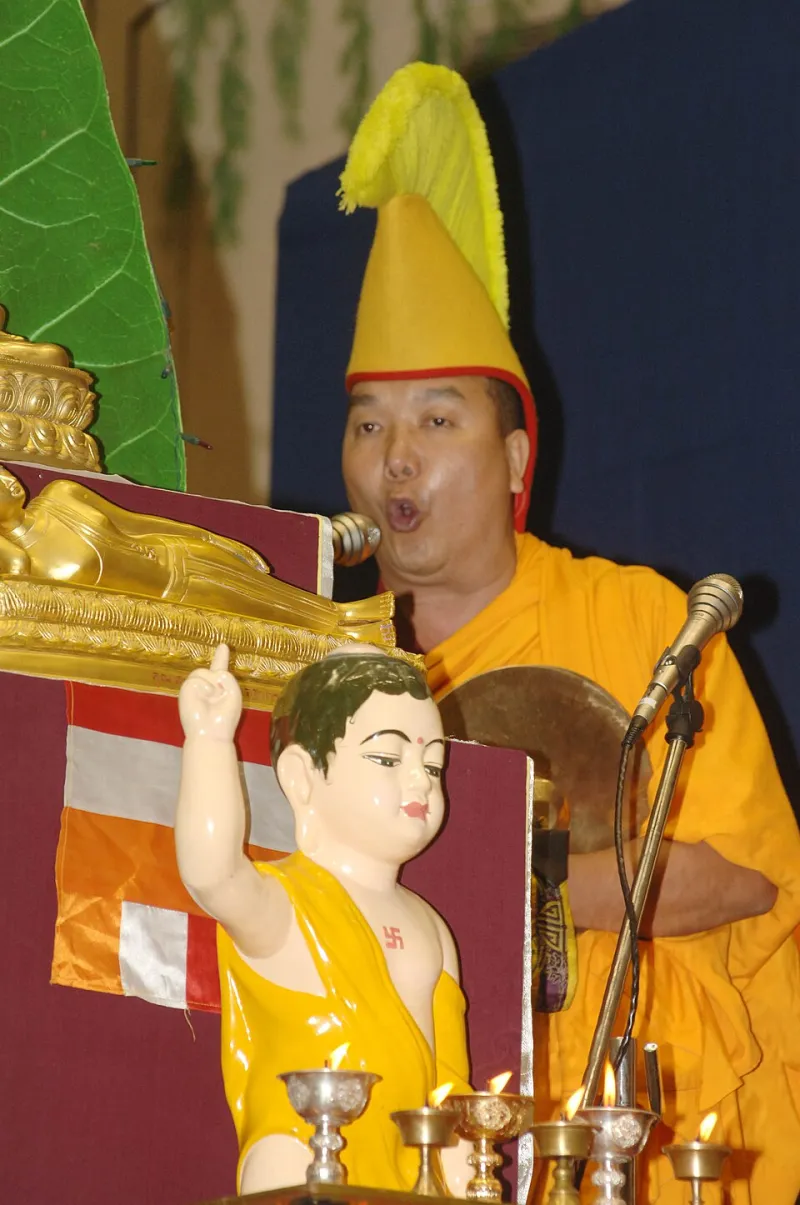
Buddhism, as encountered in the United States, is itself a meeting of multiple distinct traditions — Theravada, Mahayana, Vajrayana, and Zen among them — each with its own contemplative emphases. The single most widely practiced Buddhist meditation form in America is vipassana, or insight meditation, which involves the sustained, non-judgmental observation of present-moment experience, typically beginning with attention to the breath.
Metta, or loving-kindness meditation, offers a complementary practice: the systematic cultivation of goodwill toward oneself, toward loved ones, toward neutral persons, and ultimately toward all beings. Research on metta practice has documented increases in positive emotion, social connectedness, and self-compassion.
Buddhist meditation centers across the country — from the Insight Meditation Society in Barre, Massachusetts, to Spirit Rock in Woodacre, California — offer introductory retreats that welcome practitioners of all backgrounds and none.
Hindu Practices: Mantra, Devotion, and Inquiry
Hinduism encompasses perhaps the most extensive contemplative literature in human history. For American seekers, three entry points are particularly well-documented and accessible.
Japa — the repetitive recitation of a mantra, often using a mala (a string of 108 beads) — provides both structure and depth. The mantra So Hum ("I am That") requires no initiation and can be practiced by anyone.
Bhakti — devotional practice centered on love and surrender to the divine — is perhaps the most emotionally immediate of Hindu paths, expressed through chanting (kirtan), prayer, and the offering of daily acts to the sacred.
Jnana, the path of inquiry, involves the persistent investigation of the question "Who am I?" — a practice associated with the twentieth-century sage Ramana Maharshi that has found a wide following in Western spiritual communities.
Indigenous and Earth-Based Traditions: A Note on Respect
Many Americans feel drawn to Indigenous contemplative practices — the vision quest, the sweat lodge, ceremonial prayer forms — and this attraction deserves honest address. Indigenous spiritual traditions are living cultures, not museum artifacts. They belong to specific peoples with specific histories, many of which include the violent suppression of these very practices.
The most appropriate stance for non-Indigenous seekers is one of respectful relationship rather than appropriation: listening to Indigenous voices, supporting Indigenous-led organizations, and following the guidance of specific communities regarding what they are willing to share. Some communities welcome respectful engagement; others do not. Their boundaries deserve honor.
A Framework for Respectful Exploration
Regardless of which tradition you approach, several principles tend to serve seekers well. Learn the tradition's own language and categories before imposing external ones. Seek teachers who are themselves deeply embedded in the living tradition. Practice with consistency long enough to move past the novelty phase. And hold your findings lightly — the map is never the territory, and the most important discoveries in contemplative life tend to arrive not when we are searching most urgently, but when we have settled into the simple discipline of showing up.
The world's contemplative traditions are not a buffet from which to assemble a personalized spiritual identity. They are, each of them, complete and coherent paths — the accumulated wisdom of countless generations who found, through practice, that the interior life is inexhaustibly rich. Your task is not to consume them but to be genuinely met by one of them. That meeting, when it comes, tends to be unmistakable.