Prayers Hidden in Plain Sight: Recovering the Spiritual Lineages Buried in Your Family's Immigration Story
Somewhere in Carmela Russo's childhood home in South Philadelphia, there was a small ceramic dish that sat on the kitchen windowsill. Her grandmother filled it with water every Friday evening, placed a sprig of something green beside it, and stood quietly for a moment before beginning to cook. No one ever explained what it meant. When Carmela asked, her grandmother smiled and said only, "It's what we do."
Decades later, pursuing her family's history through genealogical records and correspondence with a distant cousin in Calabria, Carmela discovered that the gesture was a remnant of a pre-Christian water blessing practice that had persisted in her grandmother's village for generations, absorbed into Catholic household ritual, carried across the Atlantic in 1923, and maintained—stripped of its name and most of its context—in a Philadelphia kitchen until the woman who performed it died in 1987.
"I wept," Carmela said simply. "Not because it was lost. Because it wasn't."
The Spiritual Archaeology of American Immigration
American immigration history is, among other things, a history of what people chose to carry. The practical items—tools, seeds, documents, currency—have received considerable historical attention. The spiritual cargo has been less systematically examined, yet it may be among the most consequential.
Every wave of immigration to the United States brought with it not merely a population but a complex of prayer practices, ritual technologies, sacred calendars, and contemplative disciplines shaped by centuries of accumulated wisdom in specific places and conditions. These practices did not simply vanish upon arrival. They adapted, compressed, went underground when necessary, merged with other traditions in the particular crucible of American immigrant life, and persisted—often in forms their original practitioners would barely recognize—into the present.
For Americans whose family histories include immigration, this means that their spiritual inheritance is almost certainly richer and stranger than they know. The question is how to find it.
What Gets Lost and Why
The forces that eroded immigrant spiritual practices in America were multiple and often deliberate. Assimilation pressure—social, economic, and sometimes legal—incentivized the rapid adoption of mainstream American cultural forms and the abandonment of those that marked one's foreignness. Religious institutions, both in sending and receiving countries, sometimes actively suppressed folk practices they considered theologically heterodox. Languages were lost within a generation or two, and with them the prayers, songs, and oral traditions that had no existence outside those languages.
Fear played a significant role as well. Jewish families who had survived pogroms sometimes concealed religious practice as a survival reflex that outlasted the original threat. Mexican-American families whose Catholicism overlay Indigenous ceremonial traditions sometimes kept the deeper layer hidden even from their own children, uncertain whether it was safe to reveal. West African spiritual practices brought to America through the horror of the slave trade survived in encoded forms—disguised within Catholic saints' festivals, embedded in musical traditions, maintained in secret gatherings—precisely because visibility was dangerous.
The result, for many American families, is a spiritual history that is not absent but concealed: present in gestures, phrases, food practices, seasonal habits, and inexplicable family customs whose original meaning has been separated from their form.
The Tools of Recovery
The work of recovering these hidden lineages draws from several disciplines simultaneously, and it rewards patience, curiosity, and a willingness to sit with ambiguity.
Genealogical research provides the foundational map. Beyond the names and dates that genealogy conventionally recovers, the specific village or region of origin is often the most spiritually significant piece of information a researcher can locate. Regional religious practices in many parts of the world were highly distinctive—the folk Catholicism of rural Sicily differed substantially from that of urban Naples; the Jewish liturgical traditions of Lithuanian communities differed from those of Moroccan or Yemeni communities; the Indigenous ceremonial practices of the Cherokee differed from those of the Ojibwe. Knowing where your ancestors came from, at the village level rather than merely the national level, opens access to a far more specific spiritual inheritance.
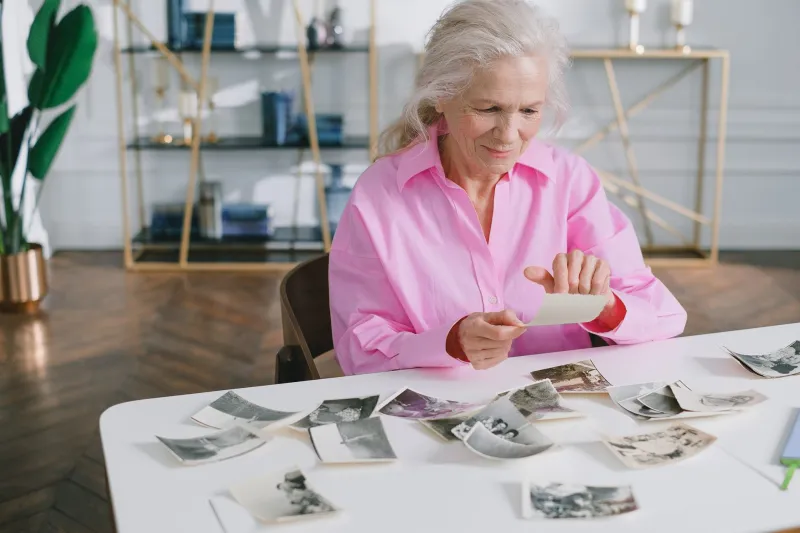
Oral history collection is equally essential, and it carries a particular urgency. The generation of Americans who had direct contact with immigrant grandparents and great-grandparents is aging rapidly. Practices, phrases, and memories that exist only in living memory will not survive without deliberate collection. Structured conversations with elderly relatives—asking specifically about ritual objects in the home, seasonal customs, prayers recited at particular times, gestures made at thresholds or before meals—frequently surface material that those relatives have never been directly asked about and assumed no one wanted to know.
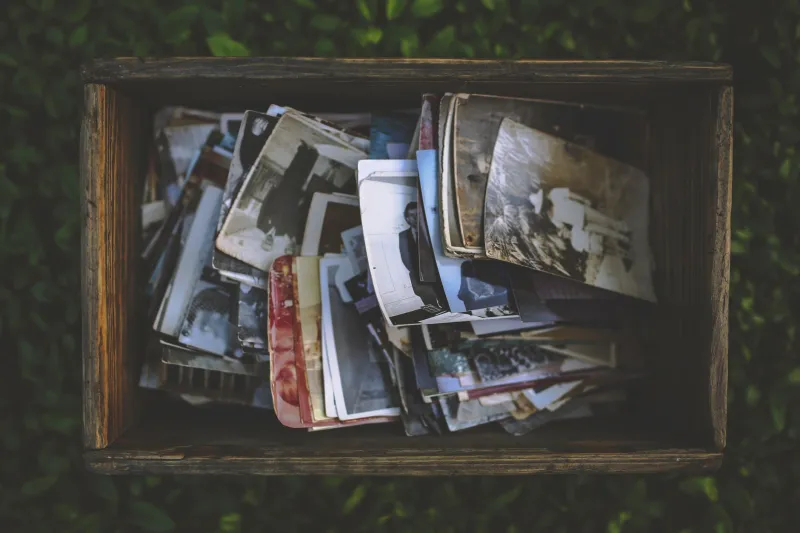
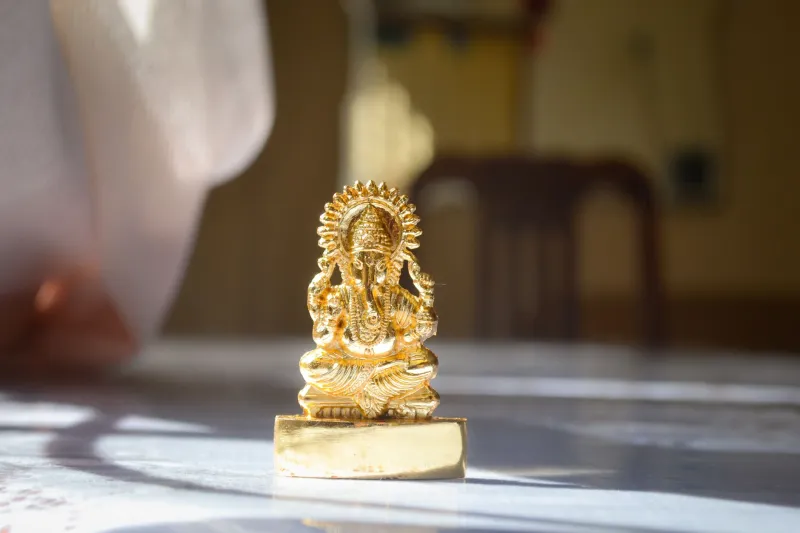
Cultural archaeology through material objects represents a third avenue. Prayer books, rosaries, amulets, embroidered textiles, ceramic objects, and photographs that survive in family collections frequently carry encoded information about spiritual practice. Consulting with scholars, cultural organizations, and diaspora communities who specialize in the relevant tradition can help decode what family members can no longer explain.
Syncretism as Spiritual Intelligence
One of the most striking findings for many Americans engaged in this recovery work is the degree to which their ancestors' spiritual lives were already syncretic—already blended, already hybrid, already the product of multiple traditions in conversation.
The Yoruba-derived traditions that became Candomblé in Brazil and Santería in Cuba and Louisiana Voodoo in New Orleans represent perhaps the most extensively studied examples of this process: the strategic, creative synthesis of West African religious frameworks with Catholic iconography, producing something that was neither simply African nor simply Catholic but genuinely new, and genuinely powerful.
Similar processes occurred across virtually every immigrant community. Eastern European Jews brought Kabbalistic folk practices that had absorbed elements of local Slavic and Romani traditions. Filipino immigrants carried a Catholicism shot through with pre-colonial Animist practices. Lebanese and Syrian Christians maintained prayer forms that predated the formal doctrinal divisions of the early Church.
For contemporary Americans, this discovery often reframes the question of authenticity. The prayer practice that feels most genuinely theirs may not be the most doctrinally pure form of a single tradition but the specific, impure, hybridized form that their particular ancestors developed in their particular circumstances. That hybridity is not a corruption of the inheritance—it is the inheritance.
The Act of Reclamation
What practitioners consistently report about the experience of recovering and resuming ancestral prayer practices is difficult to categorize neatly as either psychological or spiritual—and perhaps that distinction is less important than it first appears.
A Vietnamese-American woman in Houston described learning the specific Buddhist chants her grandmother had performed daily, chants she had heard throughout her childhood without understanding their content. Learning their meaning, and beginning to perform them herself, produced what she described as "a feeling of standing in a very long line of people who all turned to look at me."
A man of mixed Cherokee and Scots-Irish heritage in rural Tennessee described the experience of learning a specific water prayer from a tribal elder—a practice he had no childhood memory of but which felt, in his words, "already known, somehow, in a place below memory."
These accounts resist easy explanation. But they point toward something that the world's contemplative traditions have long affirmed: that we inherit not only the material conditions of our ancestors' lives but something of the spiritual work they performed—and that resuming that work, however imperfectly and incompletely, is a form of both remembrance and repair.
The prayers are there, waiting in the kitchen windowsill gestures and the inexplicable family customs and the half-remembered phrases in languages no one in the family fully speaks anymore. They were never entirely lost. They were only waiting to be asked for.