Bridges Across the Threshold: How Global Ancestor Traditions Are Finding New Life in American Homes

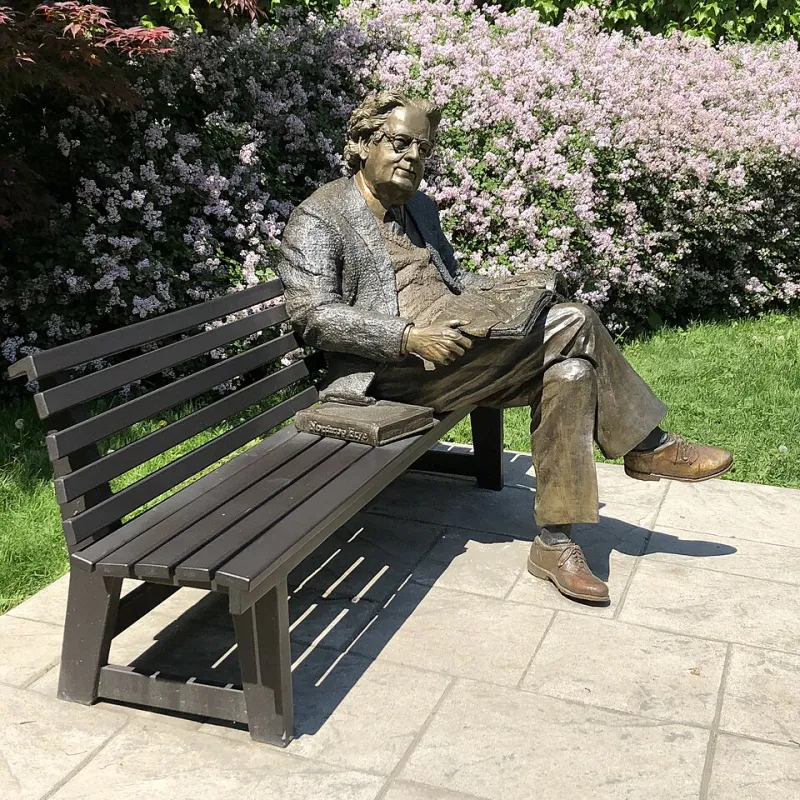
Photo: Matthew Bowden www.digitallyrefreshing.com, Attribution, via Wikimedia Commons
On a quiet street in Chicago's Pilsen neighborhood, a family assembles a ofrenda each November with the careful deliberateness of ritual. Photographs of grandparents, a great-aunt who never made it across the border, a child lost too soon—each face is anchored by marigolds, whose vivid orange petals are said, in the Mexican tradition of Día de Muertos, to guide the spirits of the departed home. The family is third-generation Mexican American. The grandmother learned the practice from her own grandmother in Oaxaca. The teenage grandchildren helped design this year's altar using a combination of hand-painted papel picado and a digital photo frame cycling through family images. The ritual is ancient. The expression of it is unmistakably contemporary.
This kind of creative continuity is playing out in living rooms, backyards, and community centers across the United States, as families from a remarkable range of backgrounds rediscover, adapt, and sometimes consciously adopt practices of ancestral prayer and veneration. What was once largely confined to specific ethnic or religious communities is becoming something more fluid—a set of spiritual gestures that Americans of many backgrounds are finding meaningful in an era marked by dislocation, grief, and an increasing hunger for what might be called rooted remembrance.
The Global Grammar of Ancestral Prayer
The impulse to maintain spiritual relationship with the dead is among the most universal features of human religious life. Anthropologists have documented ancestor veneration practices on every inhabited continent, across wildly divergent theological frameworks. What these traditions share is not a single belief about what happens after death, but a common conviction that the boundary between the living and the departed is permeable—that relationship, love, and even communication can persist across it.
In Japan, the Obon festival—observed each August across the country and in Japanese American communities throughout California, Hawaii, and the Pacific Northwest—honors the spirits of ancestors who are believed to return to the world of the living for a brief annual visit. Families clean and decorate graves, light chochin lanterns to guide spirits home, and gather for bon odori dances that have been performed, in some regions, for more than five centuries. At the festival's close, floating lanterns are released onto rivers and bays, carrying ancestral spirits gently back across the threshold.
In West African and African diaspora traditions—including the Vodou practices of Haiti, the Candomblé of Brazil, and Ifa traditions that have traveled into African American spiritual communities—ancestors are not merely remembered but actively consulted. They are understood as intermediaries between the living and the divine, their wisdom and protection invoked through prayer, libation, and ceremony. The practice of pouring water or other offerings onto the ground as a gesture of acknowledgment to those who came before is recognizable across dozens of distinct African-rooted traditions and has found expression in contemporary Black American spiritual communities that may not identify formally with any single tradition.
The Celtic festival of Samhain, observed on the eve of November 1st and widely considered an ancestor of the modern Halloween, originated in the belief that the boundary between worlds grew thin at summer's end, allowing the dead to walk briefly among the living. In contemporary Pagan and Wiccan communities across the United States—communities that have grown substantially over the past two decades—Samhain has been reclaimed as a solemn occasion for ancestor remembrance, often involving the lighting of candles, the setting of a "dumb supper" with a place set for the deceased, and the reading aloud of the names of those who have died in the preceding year.
Adaptation as Spiritual Act
What is striking about the current moment in American spiritual life is not simply that these traditions exist, but that they are crossing the boundaries of their cultures of origin in ways that feel less like appropriation and more like genuine dialogue—particularly within interfaith and multicultural families navigating their own complex inheritances.
Consider the experience of families in which one partner comes from a Japanese Buddhist background and the other from a Mexican Catholic one. Both traditions include robust practices of ancestral remembrance—Obon and Día de Muertos, respectively—that share more structural similarities than either might at first appear. Both involve the creation of dedicated spaces for the dead, the offering of food and objects the deceased loved in life, and the understanding that the living have an ongoing responsibility toward those who came before. Families navigating this kind of dual inheritance often find that combining elements from both traditions produces something that feels not syncretic in a superficial sense, but genuinely integrated—a new form of practice that honors multiple lineages simultaneously.
Immigrant communities navigating life in the United States face particular pressures in this regard. The logistical and financial realities of life far from ancestral homelands make traditional forms of commemoration difficult to sustain. Cemetery visits may be geographically impossible. Extended family networks that once held ritual knowledge collectively may be scattered. In response, many communities have developed creative adaptations: virtual ofrendas assembled through shared digital platforms, online Obon ceremonies streamed across time zones, and diaspora community centers that offer shared ancestral altar spaces for families who lack the physical room to maintain one at home.
What Researchers Are Finding
Beyond the cultural and spiritual dimensions of these practices, a growing body of psychological research is examining what maintaining a sense of ongoing connection with deceased loved ones actually does for the living. The findings are nuanced but generally encouraging.
For much of the twentieth century, dominant models of grief psychology emphasized the importance of "letting go"—of progressively relinquishing emotional attachment to the dead as a prerequisite for healthy mourning. More recent research has challenged this framework substantially. Scholars including Dennis Klass, Phyllis Silverman, and Steven Nickman introduced the concept of "continuing bonds" in the 1990s, arguing that maintaining an ongoing inner relationship with deceased loved ones is not a sign of pathological grief but a normal, often adaptive feature of bereavement. Subsequent research has found that individuals who maintain such bonds—through prayer, ritual, conversation with photographs, or the tending of ancestral altars—often report lower levels of complicated grief and greater overall psychological wellbeing.
Anthropologist Michael Kearl has noted that cultures with robust ancestor veneration practices tend to exhibit what he describes as a more "integrated" relationship with mortality—one in which death is understood as a transition rather than an absolute terminus, and in which the dead retain a meaningful social role within the community of the living. Whether or not one shares the theological premises of any particular tradition, the functional effect of these practices—providing structured occasions for grief, maintaining narrative continuity across generations, and affirming the enduring significance of those who have died—appears to be genuinely beneficial.
Practical Pathways for Respectful Engagement
For Americans who feel drawn to ancestral prayer practices outside their own cultural background, the question of how to engage respectfully is both important and worth sitting with carefully. Scholars of religion and cultural practitioners generally offer similar counsel: begin with curiosity rather than acquisition, learn from practitioners within the tradition before attempting to adopt its forms, and be honest with yourself about the difference between drawing inspiration from a tradition and claiming ownership of it.
For those whose own cultural heritage includes ancestral prayer traditions that may have been interrupted—through forced assimilation, family rupture, or simple generational distance—the path is often one of recovery rather than adoption. Genealogical research, conversations with elders, and connection with cultural and diaspora organizations can open doorways to practices that were never entirely lost, only temporarily obscured.
At its most fundamental level, ancestral prayer asks only this: that we pause, that we remember, and that we acknowledge the long human chain from which we descend. In a culture that prizes novelty and forward motion, that pause is itself a radical act—a deliberate turning toward the past not as a retreat from the present, but as a way of understanding, more fully, who we are and what we carry. The dead, these traditions suggest, are not gone. They are waiting, patient and luminous, just beyond the threshold—and the act of remembering them calls us, quietly, into a larger sense of what it means to be alive.