Giving Thanks Without Asking: How the World's Gratitude Traditions Are Quietly Transforming American Prayer
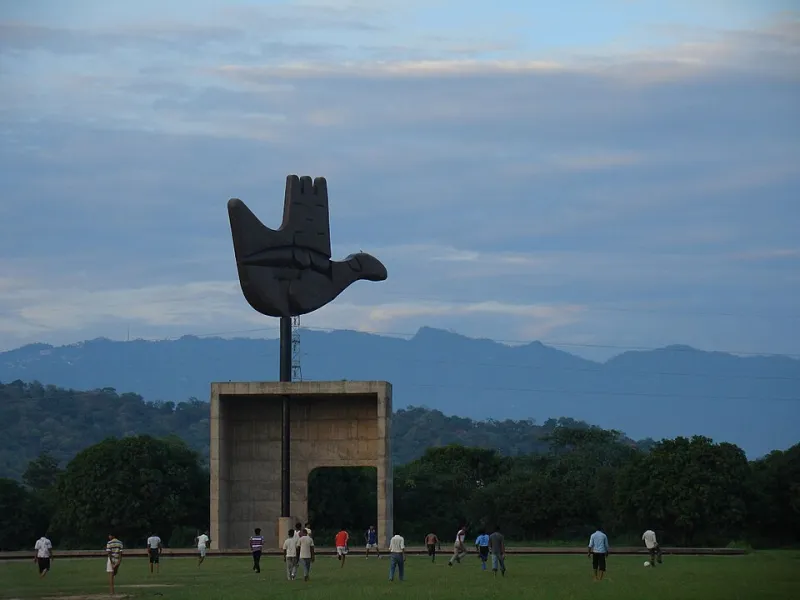
Photo: Raakesh Blokhra, CC BY-SA 2.0, via Wikimedia Commons
There is a particular kind of prayer that arrives without a list. No requests, no negotiations, no carefully worded appeals for intervention. It carries only acknowledgment — a recognition that life, in this moment, holds something worth honoring. Across cultures and centuries, this form of devotion has existed alongside the more familiar petition, often quietly, sometimes without a name. Today, in living rooms and meditation centers from Boston to Boise, Americans are discovering it anew, and many report that it has changed them in ways they did not anticipate.
The movement toward gratitude-centered prayer is not a trend born of self-help culture, though that world has certainly taken notice. Its roots run far deeper, threading through some of the most ancient contemplative traditions on earth. Understanding where these practices come from — and what they actually ask of the practitioner — offers a more complete picture of why so many Americans are finding them transformative.
The Tradition of Kansha: Japan's Practice of Grateful Awareness
In Japanese spiritual and cultural life, the concept of kansha — often translated as gratitude or appreciation — carries a weight that English translations struggle to capture. More than a feeling, kansha is understood as a disciplined awareness of interconnection. To practice kansha is to consciously recognize the countless conditions, people, and forces that make one's existence possible. It is not passive contentment; it is active, almost rigorous attention.
Within Zen Buddhist communities, this awareness is cultivated through daily rituals, including the gokan no ge, a mealtime recitation that invites practitioners to consider the labor and sacrifice embedded in every bite of food. American practitioners who have incorporated kansha into their contemplative routines frequently describe a similar effect: a heightened sensitivity to what philosopher Simone Weil once called "the reality of the other."
"When I stopped asking and started noticing," one practitioner in Portland, Oregon, shared in a recent interfaith study group, "the world got larger, not smaller. I became more aware of how much was already present."
Ubuntu and the Prayer of Relational Belonging
From the southern and central regions of Africa comes a philosophical and spiritual orientation that has quietly entered American contemplative discourse: ubuntu, most commonly rendered as "I am because we are." While ubuntu is not a prayer practice in the narrow liturgical sense, it functions as a foundational orientation for many communal gratitude rituals across Bantu-speaking cultures.
In these traditions, giving thanks is inseparable from acknowledging one's relational embeddedness. One does not thank in isolation; one thanks through community, to community, and on behalf of community. Gratitude ceremonies in several southern African cultures involve spoken acknowledgment of ancestors, neighbors, and even adversaries — all understood as participants in the web of one's becoming.
American interfaith communities that have drawn on ubuntu-inflected practices often find that this relational dimension is precisely what distinguishes gratitude prayer from mere positive thinking. The practice asks something more uncomfortable: the recognition that one's flourishing is not self-generated. For a culture that prizes individual achievement, this can be a genuinely disorienting — and, for many, genuinely liberating — reorientation.
Indigenous Thanksgiving: A Ceremony Before the Word
Long before the holiday that bears its name became a fixture of American cultural life, Indigenous nations across North America practiced forms of communal thanksgiving that were woven into the rhythms of daily and seasonal existence. The Haudenosaunee (Iroquois Confederacy) Thanksgiving Address, known as the Ohen:ton Karihwatéhkwen or "Words That Come Before All Else," offers one of the most comprehensive examples.
Recited at the opening of gatherings, the address moves systematically through the elements of the natural world — people, earth, water, fish, plants, animals, trees, birds, the winds, the Thunderers, the sun, the moon, the stars — offering gratitude to each in turn. It is not a request for future blessing; it is an acknowledgment of present gift. The address can take minutes or hours, depending on the occasion and the speaker, but its essential movement is always the same: outward, toward the world, in recognition rather than petition.
For Americans seeking to understand gratitude prayer in its most structurally complete form, the Haudenosaunee address is instructive. It demonstrates that thanksgiving, practiced with full attention, is not a brief prelude to the real business of prayer. It is the prayer.
What Neuroscience Observes
The scientific literature on gratitude has expanded considerably over the past two decades, and while researchers are careful to distinguish between gratitude as a psychological construct and gratitude as a spiritual practice, the findings are difficult to ignore. Studies conducted at institutions including the University of California, Berkeley, and the Greater Good Science Center have consistently linked sustained gratitude practices with measurable improvements in psychological well-being, reduced symptoms of depression, and enhanced social connectedness.
Neuroimaging research suggests that gratitude activates regions of the brain associated with reward processing, moral cognition, and interpersonal bonding — notably the medial prefrontal cortex. What is particularly striking, from a contemplative perspective, is that these effects appear to deepen with regularity and intentionality. Gratitude practiced as a discipline, rather than as an occasional response to good fortune, produces different and more durable outcomes than spontaneous grateful feelings.
Spiritual teachers from multiple traditions have observed something similar for centuries. The discipline, they argue, is the point. Gratitude prayer is not about waiting to feel thankful; it is about training attention to perceive what is already present.
The Shift Away from Petition
The growing American appetite for gratitude-centered practice does not represent a wholesale rejection of petition prayer. For billions of people worldwide, bringing one's needs and fears before the sacred remains a vital and irreplaceable act. Rather, what appears to be emerging is a more nuanced spiritual vocabulary — one in which thanksgiving is no longer merely a polite preamble to the real request, but a complete and sufficient practice in its own right.
This shift carries particular resonance in a cultural moment defined by pervasive anxiety, political fragmentation, and a widespread sense that individual effort is insufficient to address collective challenges. Gratitude traditions from Japan, Africa, and Indigenous North America all share a common counter-cultural premise: that what one already has, seen clearly enough, is extraordinary. That premise, transplanted into American spiritual life, does not resolve difficulty. It does something subtler — it relocates the practitioner's attention from what is absent to what is present, from what is feared to what is given.
For many Americans who have felt alienated from petition-based religious frameworks — whether because those petitions seemed to go unanswered, or because the theological assumptions underlying them no longer held — gratitude prayer offers a way back into devotional life that requires no particular creed. It asks only for attention, sustained and sincere.
Beginning the Practice
For those drawn to explore gratitude prayer across traditions, contemplative teachers generally offer similar counsel: begin small, begin specifically, and begin regularly. A brief daily practice of articulating — aloud or in writing — three things for which genuine thanks can be offered is a common entry point. Those wishing to deepen the practice might explore the structural richness of the Haudenosaunee address, the relational emphasis of ubuntu-inflected rituals, or the mindful precision of kansha-based awareness exercises.
What unites these approaches, across their considerable cultural differences, is the conviction that gratitude is not a feeling to be waited for. It is a capacity to be cultivated — and in the cultivating, something in the practitioner, quietly and reliably, begins to change.