Untethered Devotion: What It Means When Americans Pray Without Pews
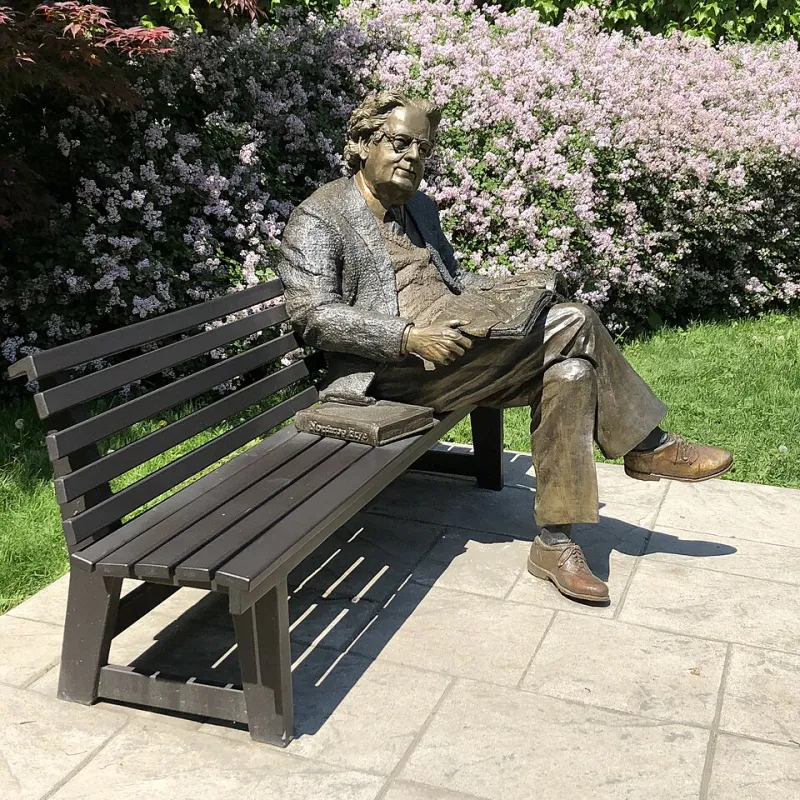
Photo: Maksim Sokolov (maxergon.com), CC BY-SA 4.0, via Wikimedia Commons
For most of recorded history, prayer and institutional religion traveled together—inseparable companions on the human journey toward meaning. In the United States today, that long partnership is being renegotiated. Recent data from Pew Research Center and Gallup indicate that while formal religious affiliation has dropped to historic lows, the percentage of American adults who report praying regularly has remained steady or, in some demographic segments, quietly climbed. The question this raises is not merely sociological. It is deeply spiritual: what happens to prayer when it is freed from the structures that once defined it?
A Statistical Portrait of the Spiritual But Not Religious
The numbers are striking in their specificity. Gallup's 2023 Values and Beliefs survey found that roughly 45 percent of Americans pray daily, a figure that has held relatively firm even as weekly church attendance has fallen below 20 percent for the first time in the organization's tracking history. Among adults under 35—the cohort most likely to identify as religiously unaffiliated—daily or near-daily prayer still registers in the mid-thirties percentagewise. Sociologists who study American religion have a name for the people behind these numbers: the "spiritual but not religious," or SBNR, a designation that has moved from academic shorthand to mainstream self-description.
Dr. Linda Mercadante, a theologian who has spent years interviewing SBNR Americans, describes their spiritual posture as one of "selective engagement." They draw from Buddhist mindfulness, Indigenous gratitude practices, Christian contemplative traditions, and Sufi devotional poetry—sometimes within a single morning routine. "They are not confused," she has written. "They are constructing."
Prayer Untethered from Doctrine
What does prayer look like when it is no longer anchored to a specific creed? For many Americans, it has become something closer to a contemplative practice than a petition to a named deity. Breath-focused stillness, gratitude journaling, walking meditation, and silent sitting are increasingly described by practitioners using the language of prayer, even when the practitioners themselves resist traditional religious labels.
This is not an entirely new phenomenon. The American Transcendentalists of the nineteenth century—Emerson, Thoreau, Margaret Fuller—articulated a vision of spirituality that transcended denominational walls. What is new is the scale. The SBNR population in the United States now numbers in the tens of millions, and their spiritual appetites are reshaping everything from publishing markets to retreat center programming.
Interfaith chaplains working in hospitals, universities, and corporate wellness programs report a sharp increase in individuals requesting "non-religious but spiritual" support. "People will say, 'I don't believe in God, but I believe in something, and I need help reaching it,'" one university chaplain at a large Midwestern institution told us. "My job has become helping them find the vocabulary for what they are already doing."
How Faith Communities Are Responding
Mainstream congregations are not standing still. Across denominations, there is a growing recognition that the SBNR population represents not an adversary but an invitation. Progressive Episcopal parishes in cities like Portland and Denver have begun hosting "open contemplation" evenings—candlelit gatherings that incorporate Taizé chant, Zen-inspired silence, and open-ended reflection prompts, with no doctrinal prerequisites for attendance.
Unitarian Universalist fellowships, long accustomed to theological pluralism, have expanded their programming to include guided practices drawn from the world's contemplative traditions. Some congregations now offer what they call "prayer literacy" workshops, introducing participants to the mechanics and histories of Sufi dhikr, Jewish hitbonenut, Hindu japa, and Christian centering prayer—not to convert, but to contextualize.
Muslim communities, too, are engaging this moment thoughtfully. Several urban mosques have begun welcoming non-Muslim neighbors to observe Jumu'ah Friday prayers, framing the invitation as an act of transparency rather than proselytization. "When people understand that salah is a full-body, five-times-daily practice of remembrance," one imam in the Chicago area explained, "it often opens something in them, regardless of their background."
The Risk of Rootlessness
Not everyone views the decoupling of prayer from tradition with optimism. Critics from across the theological spectrum worry that prayer without doctrine risks becoming a form of spiritual consumerism—a personalized experience assembled from decontextualized fragments, satisfying in the moment but lacking the depth that comes from sustained engagement with a living tradition.
The philosopher Charles Taylor, whose work on secularism has influenced religious scholars globally, has written about the danger of what he calls "the nova effect"—the explosive multiplication of spiritual options that can leave seekers perpetually browsing rather than arriving. The concern is not that people are praying wrongly, but that without community, accountability, and inherited wisdom, prayer may lose its capacity to genuinely transform.
This tension is one that thoughtful spiritual directors across traditions acknowledge. "Prayer is not just a technology for inner peace," one Benedictine oblate director observed. "It is a relationship that requires cultivation over time, within a community that holds you to it."
What This Means for the Future of Communal Devotion
The prayer paradox may ultimately be less a crisis than a signal—an indication that the hunger for transcendence is not diminishing in American life, but that its forms are diversifying at a pace institutions have struggled to match. Faith communities that are willing to hold open space, to teach contemplative practices with generosity rather than gatekeeping, and to honor the sincerity of seekers who arrive without a denominational home may find in this moment an unexpected opportunity for renewal.
The global contemplative traditions represented across this platform—from the hesychast practices of Eastern Orthodoxy to the silent sitting of Quaker worship, from Indigenous sweat lodge ceremony to the whirling meditation of the Mevlevi Sufi order—all share a conviction that the impulse to pray is, at its core, a human universal. What differs is the container. And in an era when millions of Americans are praying without containers, the question for communities of faith is whether they can build ones spacious enough to welcome them.